Looking for information about other Dental Topics?
Full Website Index• Animated-Teeth.com •

Safety issues / side effects / adverse reactions associated with the use of denture cleansers. –
How safe are commercial denture cleaners?
While safety issues with denture cleansers are uncommon, they can occur. This page reviews the kinds of reactions that have been reported with various cleaning products.
We also outline signs and symptoms to watch out for, provide a link for reporting suspected reactions to the FDA, and clear, practical tips for keeping your denture-cleaning routine as safe as possible.
1) Safety issues with persulfate denture cleansers.
One of the most publicized safety issues associated with cleaning false teeth involves persulfate compounds. It’s included in denture cleansing formulations as a cleaning and bleaching agent.
- Many of the best-known commercial (store-bought) products used to make denture-soaking solutions contain either potassium persulfate or potassium monopersulfate (potassium caroate).
- Denture cleanser brands that contain persulfate compounds include Fixodent, Polident, and Efferdent, along with many generic brands. These kinds of products often take the form of denture-cleaning tablets and are referred to as “effervescent” denture cleansers.
The concern and FDA report.
a) Allergic reactions to persulfate.
Persulfate compounds are known allergens (meaning that they can trigger an allergic reaction). Even when products that contain these compounds are used within their recommended guidelines, a reaction can occur.
FYI: Side effect vs. adverse reaction.
Some definitions of the term “side effect” include allergic reaction responses. However, it’s more common to include “allergic reactions” under the term “adverse reactions.”
An “allergic reaction” is caused by the individual’s immune system response (something relatively unique to them). In comparison, a “side effect” is a known effect that the compound frequently creates in users, however, it is not the primarily intended one.
[Related content: Homemade denture cleansers that don’t contain persulfates.]
Persulfate adverse reaction case #1:
Of the reports we read through on the FDA website, the following one seemed quite typical. It involves a woman who had an established bedtime routine of using a persulfate-containing denture cleaner, according to the guidelines of the product.
- Before going to bed she noticed itching around her eyes (one sign of having an allergic reaction) and in response (appropriately) took a dose of the medication Benedryl.
- Some hours later she woke up having difficulty breathing due to swelling of her throat. At that time, she was taken to the hospital for emergency treatment and ultimately recovered.
- Her reaction occurred after having an established history of persulfate use. This is not uncommon.
- Her reaction happened to have a slow onset. In contrast, some types of allergic reactions can occur instantaneously.
Persulfate adverse reaction case #2:
- A man wearing his 3-year-old denture developed a chronic inflammation of the lips (cheilitis).
- Testing determined that he had an allergic response to the denture cleaner he used which contained 20% potassium persulfate.
- The man became symptom-free after avoiding the use of the cleanser.
- What’s interesting about this case is that the manner in which the man used the product was within its guidelines.
His persulfate exposure stemmed from solution that had been absorbed by both denture plastic and built-up tartar accumulation.
b) Misuse of persulfate products.
The inappropriate use of persulfate cleansers is a second source of safety concerns. (Note: The outcomes we discuss here are not issues that are side effects of using persulfate denture cleansers but instead outcomes associated with their misuse.)
The concern and FDA report.
An FDA publication (2013) relates the following incidents involving misuse. Both involved serious reactions, one resulted in death.
- An 81-year-old man who, after soaking his false teeth, gargled with his denture cleanser.
- A 74-year-old woman who ate 6 denture cleaning tablets.
In these types of incidences, the resulting medical issue may be an allergic reaction. Or the compounds may cause tissue damage or be toxic when ingested.
External use only.
Denture cleanser use by seniors may need to be monitored.
One can’t help but notice that both of the cases referenced above involve persons of advanced age and possibly of diminished mental acuity. Their use of their denture cleanser lies well outside of any product’s recommendations.
The point that must be taken home is that denture cleansers contain harsh compounds that must be used appropriately (above all, always externally, never internally). Since denture cleansing is most associated with persons of advanced age, caretakers and family members must keep this in mind and monitor their charge’s activities when necessary.
2) Safety issues associated with bleach-based denture soak.
Our homemade denture cleanser page discusses the use of bleach-based soaking solution (0.5% sodium hypochlorite). And there can be safety issues associated with its use too.
a) Allergic reactions to bleach.
Some people will experience an allergic reaction to bleach-based solution (of any concentration), with varying symptoms and onset as described below. (As discussed above, allergic reactions are best described as “adverse reactions” as opposed to “side effects.”)
b) Effects of oral and intestinal exposure.
Note: The following information describes a worst-case, most extreme type of scenario and pertains to bleach-based solutions having a sodium hypochlorite concentration of up to 10%. This level is 20 times the concentration of the homemade denture cleanser our pages describe using.
For comparison (and as possible sources for inappropriate use), household bleach straight out of the bottle typically has a concentration of 5 to 6%. Chlorine products for pool and spa disinfection frequently have a 10 to 12% concentration.
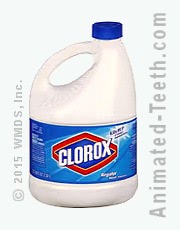
Household bleach can be used to make a denture-soaking solution.
Exposure: Adults, 200ml or less (0.85 cups), 10% sodium hypochlorite or less.
- The solution is typically a mild to moderate tissue irritant that usually causes minimal health effects.
- It may cause burns to the mouth, throat, esophagus, and stomach. (Severe irritation is possible when prolonged contact or large quantities are involved.)
- It may cause inflammation and pain in the mouth, throat, and esophagus, and gastrointestinal irritation. Difficulty with swallowing. Abdominal pain, nausea and vomiting.
- These symptoms should not be considered side effects associated with using chlorine-based denture cleansers but instead adverse reactions due to their misuse.
3) Keeping denture cleaning safe.
a) The product’s directions must be followed.
It goes without saying that you must read the directions of the product you use. These instructions have been formulated with user safety in mind. They must be followed.
Elderly persons.
As the example cases above demonstrate, denture cleaner misuse is often associated with elderly persons and conditions they may have.
- Poor eyesight. – The user may literally be unable to read the fine print directions found on their product.
- The mental status of the user must be considered. – Some may have an inability to comprehend the meaning or importance of instructions.
That means the activities of people who are at risk must be monitored.
Denture cleaning solutions are for external use only.
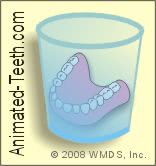
Never use a cleaning solution directly in your mouth.
Rinse your denture off thoroughly after soaking.
b) Denture cleaners are for external use only.
Mouthwash terminology.
c) Rinsing your appliance.
False teeth should always be rinsed off thoroughly with cool water before they are inserted back into your mouth.
- The ingredients found in denture cleansers can be irritating to soft oral tissues.
- Even residual traces of soaking solutions and cleaning products can trigger an allergic reaction.
d) Watch for signs of a reaction to the cleanser.
Reactions can include (but are not limited to) the signs and symptoms listed below, not all of which will occur immediately.
Allergic reactions –
Symptoms can include the following, which won’t necessarily just involve oral tissues: itching, rash, hives, tissue redness, gum tenderness, difficulty with breathing, hypotension (low blood pressure).
The symptoms you experience may appear immediately, or possibly not for some hours after your exposure. Prolonged exposure to products (days, months) may cause chronic tissue irritation.
Signs associated with cleaner misuse (including gargling and swallowing) –
Tissue bleaching, irritation, burns or damage. Foaming from the mouth. Especially in the case of ingestion, abdominal pain, breathing problems, seizures, vomiting, hypotension, or blood in urine.
4) What should you do if a reaction occurs?
- Remove your dentures. Rinse your mouth out with water to minimize whatever residual traces of the cleaner remain.
- Contact your dentist and/or local emergency response system. Dialing 1-800-222-1222 (a service of the Health Resources & Services Administration) will put you in contact with the poison center in your local area.
- Make note of the specific product you have used so that information can be given to your attending healthcare provider.
- Consider filing a report with the FDA
 so your experience is included in their database. Doing so may help them identify trending problems with your brand or type of cleanser.
5) Ingredients found in commercial denture cleansers.
Commercial products for cleaning false teeth generally fall into one of the following four categories.
a) Alkaline Peroxidases.
This is probably the type of denture cleanser you’re most familiar with. It typically comes packaged in tablet or powder form and is used for daily overnight soaks.
One characteristic of these products is they effervesce (release oxygen bubbles). This creates a weak scrubbing action on the soaking appliance’s surface. These products typically are effective for denture disinfection.
Ingredients frequently included: sodium perborate, sodium percarbonate, sodium bicarbonate, potassium monopersulfate, troclosene potassium
Brands that contain this type of ingredient: Fixodent, Polident, Efferdent, and many generic brands.
The FDA has issued a report about safety concerns associated with the use of persulfate compounds, see our discussion above.
b) Alkaline Hypochlorites
Hypochlorite is the active ingredient found in bleach, which makes these products good for disinfecting dentures as well as removing stains. They’re not, however, especially good at removing tartar.
Using this type of product involves similar precautions as with homemade bleach-based soaks (see above). Hypochlorite solutions can corrode metal denture parts.
Ingredients frequently included: sodium hypochlorite
c) Acids.
Some professional denture cleaning products are acidic in nature. They frequently contain diluted forms of hydrochloric or phosphoric acids.
Because they’re acidic, they excel in removing tartar (accumulated mineral deposits). But due to the care with which they must be handled, they don’t make an appropriate choice for home use. As a homemade alternative, vinegar soaks (acetic acid) can be used.
Ingredients frequently included: hydrochloric acid, phosphoric acids
d) Detergents and enzymes.
Some commercial denture cleaners are detergent (soap) and enzyme-based. Others have these ingredients added to boost their cleansing effectiveness. [Detergent also aids denture brushing.]
Ingredients frequently included: Sodium polyphosphate, trisodium phosphate, everlace.
Last reviewed: September 22, 2023
Author: Paul Cotner, DMD — retired dentist.
Published by: WMDS, Inc. — owner of Animated-Teeth.com.
Educational information only — not a substitute for professional dental care.
Page references sources:
Cosmetic Ingredient Review (CIR). Amended Safety Assessment of
Persulfates as Used in Cosmetics. (2018)
Cosmetic Ingredient Review (CIR). Amended Safety Assessment of
Persulfates as Used in Cosmetics. (2017)
GOV.uk. Sodium Hypochlorite Toxicological Overview.
Le Coz CJ, et al. Allergic contact cheilitis due to effervescent dental cleanser: combined responsibilities of the allergen persulfate and prosthesis porosity.