Looking for information about other Dental Topics?
Full Website Index• Animated-Teeth.com •

Mouthwash ingredients proven to fight bad breath – with a listing of brands that contain them.
What are the most effective mouthwash ingredients for treating halitosis?
If you’ve ever looked at the ingredients listed on the label of a bottle of mouthwash that claims to be effective in controlling bad breath, you might wonder which are the most effective ones and how they work.
That’s the purpose of this Guide. It explains how the ingredients found in mouthwash formulations create their effect. Covers scientific evidence that documents the effectiveness of these compounds. And lists products that contain these ingredients in their formulation.
What ingredients do we cover?
While researching this subject, the following 6 compounds stood out as the ones most studied, and most frequently included as active ingredients in oral rinses formulated to combat halitosis.
chlorhexidine gluconate, cetylpyridinium, chlorine dioxide, zinc chloride, triclosan, essential oils/antiseptic formulations.
Looking for brand names?
Within our discussion about each compound, we also include the brand names of products that contain them. We’ve also compiled that same information into the single list shown here: Mouthwash brands and their primary active ingredients.
How do compounds that fight bad breath work?
a) One of two mechanisms is usually involved.
When it comes to mouthwash active ingredients and their effectiveness in combating halitosis, their mode of action is usually based on their having one of the following abilities:
1) Antibacterial agents.
Since it’s anaerobic bacteria Examples. living in your mouth that create the smelly compounds that cause bad breath, mouthwashes that contain antibacterial agents can help to reduce their numbers, and therefore aid in reducing malodor.
- Ingredients to look for – Chlorhexidine, cetylpyridinium chloride, and/or triclosan are antibacterial compounds frequently included in the formulations of mouthwashes.
2) Ingredients that affect VSC formation.
VSC’s (volatile sulfur compounds) are the smelly molecules Examples. responsible for the stench of bad breath. So any compound that’s effective in neutralizing them, will help to improve the quality of your breath.
- Ingredients to look for – Chlorine dioxide (sodium chlorite) and zinc compounds have been demonstrated to have an effect on VSC’s.
b) Combination formulations have been shown to be the best.
Research shows that the most effective mouth rinses for halitosis employ a multifaceted approach. Via this method, they’re able to tackle a person’s breath odor problems on more than one front simultaneously.
c) Other kinds of products use these same ingredients for odor control.
Besides just mouthwashes, other types of products can serve as a delivery system for the compounds discussed on this page. They include: mints, lozenges, sprays, drops, gum, and toothpaste.
Mouthwash ingredients proven effective in helping to control bad breath.
1) Antibacterial compounds –
a) Chlorhexidine gluconate mouthwash.
The most common formulation of this compound is a 0.12% oral rinse (Peridex®, Perioguard®), available by prescription only (such as from your dentist).
Effectiveness.
In terms of effectiveness in treating bad breath, chlorhexidine is generally considered to be the gold standard of oral rinses.
- Several studies have demonstrated that the use of a 0.2% solution can produce a significant reduction in VSC levels, for over 3 hours. (Some studies suggest that some level of effect lasts for as long as 12 hours.) The use of a 0.12% rinse (the most common formulation) tends to create a similar but less robust benefit.
This prolonged effect is due to the fact that chlorhexidine is adsorbed onto oral surfaces (it binds to the surface of tissues). Then, over time, it is gradually released into the oral cavity.
- Its antimicrobial effects also help to create a reduction in breath odor over the long term. (Its use can reduce plaque formation on the order of 35 to 60%.)
▲ Section references – Cortelli, Lourith, Amoian
Chlorhexidine side effects.
Unfortunately, the use of chlorhexidine mouthwash creates some noticeable side effects. And for that reason, it should only be used under the supervision of a dentist, especially when its long-term use is planned. Issues of concern are:
- Temporary but noticeable staining of the user’s tongue and teeth. Professional dental cleaning is usually required to remove the discoloration from tooth surfaces.
- It tends to alter the user’s sense of taste. The compound itself also has a bad taste.
- Its use tends to increase tartar formation. Extended use may result in tissue irritation.
▲ Section references – Fedorowicz, Cortelli
Other issues.
The activity of chlorhexidine gluconate can be negatively affected by certain types of compounds, including some that are routinely found in toothpaste formulations. So for maximum effectiveness, be sure to read your product’s directions.
Chlorhexidine mouthwash brands to look for:
- Peridex®, Perioguard®, Paroex® – chlorhexidine gluconate
- Perio-Aid® – chlorhexidine + cetylpyridinium chloride
- Halita® – chlorhexidine + cetylpyridinium chloride + zinc lactate
[See our “most effective” section for information about demonstrated effectiveness. Research findings.]
b) Cetylpyridinium chloride mouthwash.
Properties: Antibacterial
Cetylpyridinium chloride is an antibacterial compound that helps to reduce breath odors by way of helping to control the number of VSC-producing anaerobic bacteria living in a person’s mouth.
Effectiveness in mouthwash.
Studies suggest that the antibacterial effect of cetylpyridinium chloride (CPC) isn’t as robust as chlorhexidine’s.
- A study by Ayad determined that the use of a 0.075% CPC mouth rinse (Crest Pro-Health® mentioned below contains this concentration) over a 6-month period reduced plaque accumulation scores on the order of 35%. (Reductions produced by chlorhexidine can be up to 60%.)
- Its effect on VSC levels was found to last for only 3 hours, as compared to up to 12 hours for chlorhexidine.
However, simply rinsing with a CPC product more frequently throughout the day could be a method of overcoming this shortcoming.
Other important pages –
Other issues.
The activity of cetylpyridinium can be negatively affected by certain types of compounds, including some that are routinely found in toothpaste formulations. So for maximum effectiveness, be sure to read your product’s directions.
Something you probably didn’t know.
▲ Section references – Lourith
Cetylpyridinium chloride mouthwash brands to look for:
- Crest Pro-Health®, Scope®, Cepacol®, Colgate Plax®, Act Advanced Care®, KForce Balance® – cetylpyridinium chloride
- Breath Rx® – cetylpyridinium chloride + zinc + essential oils
- Perio-Aid® – chlorhexidine + cetylpyridinium chloride
- Halita® – chlorhexidine + cetylpyridinium chloride + zinc lactate
[See our “most effective” section for information about demonstrated effectiveness. Research findings.]
c) Essential oils / Antiseptic mouthwash.
Properties: Antibacterial
Essential oil mouth rinses are typically water/alcohol solutions of menthol, eucalyptol, thymol, and/or methyl salicylate.
These products have a history of being used in the treatment of gum disease. When used for that purpose or the treatment of halitosis, the basis of their effect is due to their antibacterial properties.
The most common form of this kind of preparation is the “antiseptic” mouthwash (e.g. Listerine® or one of its many generic equivalents). The typical formulation is: 0.092% eucalyptol, 0.042% menthol, 0.06% methyl salicylate and 0.064% thymol in a solution containing 21.6% to 26.9% alcohol.
Effectiveness as a mouthwash.
Studies suggest that:
- The initial effect (first 60 minutes) of using this type of preparation is simply re-odorization, meaning that the essential oils act as masking agents that just cover over the person’s breath odor.
- At post-treatment times of 2 to 3 hours, the anti-odor activity of these products is more likely due to their antibacterial action.
- Long-term use of an essential oil rinse can help to maintain reduced levels of VSC-producing bacteria (both living in dental plaque associated with teeth and gums, and in the coating that builds up on the tongue). Dental plaque reductions lie on the order of 20 to 55%.
- A part of the effectiveness of essential oils apparently stems from their ability to permeate into the depths of oral biofilms to a greater degree than other types of compounds.
▲ Section references – Cortelli, Gera
Antiseptic mouthwash side effects and criticisms.
Despite its effectiveness in killing bacteria, this type of mouthwash may not make the best choice for treating bad breath:
- Antiseptic preparations typically contain high levels of alcohol (around 25% ethanol). Alcohol is a desiccant and therefore creates a drying effect on oral tissues, a phenomenon that typically aggravates a person’s breath problems.
(Follow this link for more details about how dry mouth conditions contribute to oral malodor. Factors.)
- High alcohol levels may create an unpleasant burning sensation for some people, thus lowering their compliance in using the rinse.
- Ethanol may be metabolized into smelly compounds, thus increasing breath malodor.
▲ Section references – Lourith
Essential oils mouthwash brands to look for:
- Listerine® – essential oils
- Generic “antiseptic” mouthwashes (of which there are many) – essential oils
- Breath Rx® – cetylpyridinium chloride + zinc + essential oils
[See our “most effective” section for information about demonstrated effectiveness. Research findings.]
d) Triclosan mouthwash.
Properties: Antibacterial
Triclosan is an antimicrobial compound that reduces VSC formation by way of reducing the level of bacteria that create them. Besides just mouthwash, it’s also found in other oral care products.
Triclosan mouthwash side effects/safety concerns.
Concerns have been raised about the safety of using products formulated with triclosan. Use this link for further discussion.
Triclosan mouthwash brands to look for:
- Breeze® – triclosan, zinc
2) Compounds that affect VSC formation. –
As opposed to an antibacterial approach, another way to combat halitosis is to have an effect on the smelly molecules (VSC’s) that are responsible for it.
a) Chlorine dioxide mouthwash (or sodium chlorite).
Properties: Affects Volatile Sulfur Compound Formation, Antibacterial
Chlorine dioxide (ClO2) is an oxidizing agent that’s able to degrade sulfur-based amino acids. Since these are the building blocks of the volatile sulfur compounds that cause bad breath, when fewer of them are available to bacteria, fewer smelly VSC’s are formed.
As an additional mechanism, chlorine dioxide also has antimicrobial properties and therefore can help to reduce the number of bad-breath-causing bacteria living in a person’s mouth.
Effectiveness.
- The one-time use of a mouth rinse containing 1.0% sodium chlorite was found to be effective in reducing VSC levels for a period of 8 hours and beyond.
- Combination mouthwashes (such as chlorine dioxide + zinc) are likely more effective than the use of either component alone.
▲ Section references – Frascella, Fedorowicz
Chlorine dioxide mouthwash brands to look for:
There seems to be no shortage of brands of these types of rinses or advertising hype to go along with them. Some mouthwashes are formulated with sodium chlorite as the active ingredient, which then breaks down to release chlorine dioxide.
- CloSYS®, ProFresh®, TheraBreath®, DioxiCare® – chlorine dioxide
- TriOral®, SmartMouth®, Oxygene®, Oxyfresh® – chlorine dioxide + zinc
[See our “most effective” section for information about demonstrated effectiveness. Research findings.]
b) Zinc mouthwash.
Properties: Affects Volatile Sulfur Compound Formation
▲ Section references – Cortelli
▲ Section references – Dadamino
Effectiveness in mouthwash.
Zinc is the metal of choice for rinses used to treat bad breath. Not because it’s the most effective one (copper is) but because it provides a benefit, yet has low toxicity and does not create tooth staining (like other metals can, especially tin and copper).
- Studies have shown that 1% zinc acetate mouthwash has a significant effect on VSC levels, even 3 hours after use.
- It’s common for rinses to include zinc as one of their active ingredients (combination treatment).
▲ Section references – Cortelli
Zinc mouthwash side effects.
Some people may notice that mouthwashes that contain zinc compounds have a metallic taste or odor. (Most products contain masking agents that are able to keep this issue in check.)
Zinc mouthwash brands to look for:
- Halita® – chlorhexidine + cetylpyridinium chloride + zinc lactate
- Breath Rx® – cetylpyridinium chloride + zinc + essential oils
- TriOral®, SmartMouth®, Oxygene®, Oxyfresh® – chlorine dioxide + zinc
- Breeze® – triclosan, zinc
[See our “most effective” section for information about demonstrated effectiveness. Research findings.]
Mouthwash brands and their active ingredients.
The list below is a compilation of the various products we’ve mentioned above and the halitosis-fighting compounds they contain. (Note: Ingredient lists can change so please compare what we state to the labeling of the product you plan to purchase.)
- Peridex®, Perioguard®, Paroex® – chlorhexidine gluconate
- Perio-Aid® – chlorhexidine + cetylpyridinium chloride
- Halita® – chlorhexidine + cetylpyridinium chloride + zinc lactate
- Listerine® and generic “antiseptic” mouthwashes (of which there are many) – essential oils
- Breath Rx® – cetylpyridinium chloride + zinc + essential oils
- Crest Pro-Health®, Scope®, Cepacol®, Colgate Plax®, Act Advanced Care®, KForce Balance® – cetylpyridinium chloride
- TriOral®, SmartMouth®, Oxygene®, Oxyfresh® – chlorine dioxide + zinc
- CloSYS®, ProFresh®, TheraBreath®, DioxiCare® – chlorine dioxide
- Breeze® – triclosan, zinc
Below on this page, we discuss the comparative effectiveness of these different product formulations. Jump ahead.
So, any mouthwash that contains one or more of the ingredients listed above should be effective in curing bad breath?
Well, no, not necessarily. Instead, there are two points of which you should be aware.
a) The use of mouthwash is seldom an effective cure on its own.
Even the best mouthwash formulations for treating halitosis can’t really be expected to provide a complete cure for a person’s breath odors. That’s because they can’t, just on their own, address all of the issues that apply in most people’s cases. Why not? / What to do.
b) Some mouthwash formulations are more effective than others.
We’ll also mention that from a standpoint of research findings, some products have more credible evidence documenting their effectiveness than others.
Literature reviews.
There are a couple of published literature reviews that have sorted through this evidence and passed judgment on it.
- With this type of evaluation, the authors set guidelines as to which studies qualify for being included in the review.
(Standards are typically based on the way the study has been designed, carried out, and what potential it contains for bias. It’s common that only a fraction of all studies found on a subject can meet a review’s stringent criteria.)
- Then, based on just those studies that can meet the review’s high standards, collective conclusions about the subject are then drawn.
▲ Section references – Fedorowicz, Blom, Slot
What does research suggest are the best mouthwashes for treating bad breath (in terms of proven effectiveness)?
a) Which types of rinses stood out?
All three of the literature reviews mentioned above concluded that the most compelling evidence (based on a study performed by Roldan 2003) supported the use of a mouthwash that contained the ingredients:
- chlorhexidine (0.05%) + cetylpyridinium chloride (0.05%) + zinc lactate (0.14%)
The study determined that after 2 weeks of use this formulation reduced VSC levels, and improved breath odor, but had no real effect on the amount of tongue coating that existed.
▲ Section references – Roldan, Blom
Other important pages –
What product is this?
Precautions.
We should note that chlorhexidine products characteristically cause tooth staining, tongue discoloration, and altered taste. Chlorhexidine side effects.
At 0.05% (about 1/2 the most common prescription formulation in the US which is 0.12%) and with just short-term use (2 weeks in the Roldan study), this might be somewhat less of a concern. But it only makes sense to use this product under your dentist’s supervision.
b) What other rinses were found to be effective?
Drawing information from some studies that satisfied the criteria of one or more of the literature reviews mentioned above, we’ll mention the following insights.
Borden (2002)
- A rinse containing cetylpyridinium chloride + zinc (BreathRx®) was more effective in reducing breath malodor and VSC levels than …
- … an essential oil preparation (Listerine®) or chlorine dioxide + zinc mouthwash (Oxygene®).
Codpilly 2004
In direct contrast to the Borden study, this one determined that …
- Sodium chloride (chlorine dioxide) + zinc mouthwash (TriOral®) was more effective than …
- … mouthwash containing cetylpyridinium chloride + zinc rinse (BreathRx®, the product favored by the first study).
Kozlovsky (1996)
This older study confirmed that …
- Cetylpyridinium chloride mouthwashes are more effective than …
- … those formulated with essential oils (Listerine®).
▲ Section references – Fedorowicz, Slot
Our conclusions about the best mouthwashes for treating halitosis.
To us, the above research seems to suggest these points:
a) Look for a multi-ingredient formulation.
The best products typically contain a combination of ingredients rather than relying on the performance of just one.
So as an example, that means selecting a product that contains some compounds that are antibacterial What they accomplish. (e.g. chlorhexidine, cetylpyridinium chloride, triclosan) and others that disrupt VSC formation What they accomplish. (e.g. chlorine dioxide, zinc) likely makes the better choice.
(Use the links above if you don’t understand the role that each of these approaches plays in curing bad breath.)
b) Even the best research evidence isn’t that overwhelming.
The product Halita® (chlorhexidine + cetylpyridinium chloride + zinc lactate) evidently has the best research evidence demonstrating its effectiveness.
It’s important to point out, however, that all three of the literature reviews cited above only considered this evidence of effectiveness to be “very low to moderate” (Blom) or “weak” (Fedorowicz, Slot).
(That’s generally typical of studies associated with halitosis research. An environment where most studies can’t even meet basic standards and even the best studies only provide weak evidence.)
Other considerations.
We’ll also remind you that this “best” rinse had no significant effect on the amount of coating found on subjects’ tongues. (This is usually the primary harbor of bad breath-causing bacteria in a person’s mouth.)
To us, this is a clear indication that the use of a mouthwash alone (without proper oral home care) is unlikely to provide a complete cure.
Related page: The [simple] 3-pronged approach that it really takes to cure bad breath. The steps.
c) A general ranking of products.
From the above studies, it seems you could reasonably conclude that there’s no overwhelming evidence that favors the use of chlorine dioxide + zinc mouthwashes (like Oxygene®, TriOral®, SmartMouth®) over cetylpyridinium chloride + zinc ones (Breath Rx®).
Additionally, all of the above products and formulations seem to have been proven to be more effective than the use of essential oil preparations (Listerine® and antiseptic mouthwash generic equivalents).
So, how effective is using a mouthwash, even one of the best ones?
We think the discussion on this page makes it clear that even the best products for treating bad breath probably aren’t as effective as you might have expected or hoped (or promised by advertising claims).
Their use can have a place, and serve a purpose. But mouthwash is best used only in conjunction with thorough mechanical mouth cleaning. (Mechanical cleansing means tooth brushing and flossing How to., and tongue scraping or brushing How to..)
So, is it necessary to use mouthwash?
No. Curing halitosis has to do with reducing the number of bacteria living in your mouth that produce VSC’s. And the most effective and efficient way to do that is via mechanical removal (tongue cleaning and also brushing and flossing your teeth).
Then, as an additional step, using a mouth rinse can further assist in killing bacteria that remain or neutralizing the smelly compounds they have created. The same can be said for adjunct products like mints, lozenges, gum, toothpaste, etc…
But despite whatever advertising claims you see, don’t expect any type of mouthwash or breath aid to be an effective cure just on its own. That simply isn’t realistic. Rinsing, with any type of compound, can’t remotely compete with the outcome achieved via mechanical debridement.
How to use mouthwash so you get the most benefit from it.
1) When should you rinse?
As a general rule, you’ll get the most out of using an oral rinse if you use it after you have already brushed and flossed your teeth, and cleaned your tongue. Here’s why.
- It’s difficult for rinses to penetrate oral biofilms (plaque that has built up on and around a person’s teeth, gums, and tongue).
- As a result, the bacteria (and their waste byproducts) situated deep within the film go largely unaffected.
By rinsing after you have already cleansed your mouth, the plaque that still remains will at least potentially have been disrupted and exposed. As a result, it will be more easily penetrated by, and therefore more vulnerable to the actions of, the compounds found in the rinse you are using.
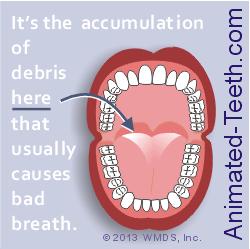
That’s why you need to gargle as far back as possible, so to get at the bacteria that cause bad breath.
2) Gargling.
Note: You should spit out mouth rinse after gargling. Children should not be given mouthwash because of the possibility that they may swallow it.
3) Swishing.
Besides just focusing on your tongue, you should also swish mouthwash around in your mouth (especially in between your teeth), so its components can create an effect in those locations too.
Don’t overlook the use of breath mints, lozenges, sprays, drops, toothpaste, and chewing gum.
Other than just oral rinses, other types of products (breath mints, lozenges, toothpaste, sprays, drops, chewing gum) can be used to deliver compounds that have been shown to be effective in combating halitosis.
And, in fact, their use may deliver the therapeutic agent over a longer time span, or more often, than what’s common with just rinsing alone, thus giving it a greater exposure in your mouth.
Examples.
- Many compounds provide their greatest benefit only over a relatively short duration. If so, the convenience of using a spray, drops, mint, lozenge, or chewing gum may provide a way of applying the remedy more frequently than just using mouthwash would allow.
- Products that dissolve in your mouth (mints, lozenges) have the added benefit that they can provide a way of creating a more prolonged exposure to the compound in your mouth.
- When objects (like mints, lozenges, or chewing gum) are consumed, they tend to stimulate the flow of saliva. This increased oral moisture, in turn, creates an enhanced washing-away and diluting effect of both oral bacteria and the smelly VSC byproducts they create. How this works.
These products are adjuncts, not stand-alone cures.
Just like discussed above with mouthwash, and despite what you may interpret from the advertising you see, it’s important to keep in mind that these types of products are best utilized as additions to the other efforts you’re using to cure your halitosis.
On their own, any type of product that solely relies on a chemical approach to curing halitosis is unlikely to provide a complete solution. That’s because mechanical cleansing (brushing, flossing, tongue cleaning) is also needed to fully disrupt existing colonies of odor-causing bacteria.
What to look for when selecting a product.
You need to specifically look for the kinds of ingredients discussed above that have been shown to be effective in treating halitosis because not all breath-oriented products do.
Don’t be fooled.
Products that don’t contain proven compounds usually just create a temporary masking effect of breath odors via perfumes and flavorings.
If so, their use has very limited value. Beyond their short-term benefit (however effective that is), they offer nothing that actually addresses the underlying fundamental causes of halitosis.
Choose a sugar-free product.
In all cases, and especially those where the type of product you choose will be utilized multiple times per day and/or will remain in your mouth for an extended period of time, it’s vital that you choose a product that’s sugar-free.
Failing to do so can place you at increased risk for tooth decay, possibly substantially so. When looking for a product, look for those sweetened with the compounds sorbitol and/or xylitol.
A big benefit of chewing gum.
As mentioned above, just the act of having something in your mouth, like chewing gum, can help to decrease halitosis. That’s because as you chew, your body tends to produce more saliva. And an increase in salivary flow helps to dilute and wash away the smelly volatile sulfur compounds that cause bad breath.
Admittedly, however, this is just a temporary effect and offers nothing toward addressing the fundamental causes of a person’s halitosis.
Zinc chewing gum.
As a way of improving the benefits/effectiveness of their products, some manufacturers have incorporated zinc compounds into the formulation of their products.
Effectiveness.
Rosing evaluated VSC levels after test subjects chewed gum, both a regular one and a sugar-free product that also contained zinc.
- The use of both gums produced a reduction in VSC levels, even out to 60 minutes after chewing. (60 minutes was the point where no further testing was performed.)
The authors of the paper concluded that the lack of difference between the effect of the two products suggested that the act of chewing, and the increase in saliva production it produced, was a more significant factor than the actual compounds found in the gum.
Another study.
▲ Section references – Rosing, De Luca-Monasterios
Considerations.
The findings of these studies show that the use of chewing gum can provide an effective short-term remedy. But that any additional cost associated with a product that contains additional active ingredients, like zinc, may be hard to justify.
It’s very important to note that in regard to tooth decay prevention (a separate issue that should always be kept in mind) that the product that’s chosen should be a “sugarless” one. (Sorbitol and xylitol are common alternative sweeteners used for these types of products.)
Considerations with toothpaste.
Toothpaste formulations can include compounds that are effective in helping to control bad breath.
1) Stannous fluoride.
Toothpaste formulations frequently contain fluoride. And those that utilize its stannous fluoride form have the added benefit that this compound has antibacterial properties that can have an effect on the types of bacteria that cause halitosis.
Currently, two prominent multi-care toothpastes Crest Pro-Health | Colgate Total are formulated with stannous fluoride, and have earned the American Dental Association’s Seal of Acceptance for the category of “Bad Breath Control.”
2) Zinc compounds.
A study by Navada found that the use of toothpaste formulated with zinc (zinc sulfate) was effective in reducing oral malodor. (As measured by test subject VSC levels, which showed reductions ranging from 16% to 46% vs. the control group.)
- Initially, the effect was found to last for 2 hours following brushing.
- After 4 weeks of continued use, the reduction in VSC’s lasted 12 hours. (Long-term usage provided a greater benefit.)
Last reviewed: May 07, 2025
Author: Paul Cotner, DMD — retired dentist.
Published by: WMDS, Inc. — owner of Animated-Teeth.com.
Educational information only — not a substitute for professional dental care.
Page references sources:
Amoian B, et al. The clinical evaluation of Vi-one chlorhexidine mouthwash on plaque-induced gingivitis: A double-blind randomized clinical trial.
Ayad F, et al. A Comparative Investigation to Evaluate the Clinical Efficacy of an Alcohol-Free CPC-Containing Mouthwash as Compared to a Control Mouthwash in Controlling Dental Plaque and Gingivitis: A Six-Month Clinical Study on Adults in San Jose, Costa Rica.
Blom T, et al. The effect of mouth rinses on oral malodor: a systematic review.
Cortelli JR, et al. Halitosis: A review of associated factors and therapeutic approach.
De Luca-Monasterios F, et al. Effect of chewing gum on halitosis.
Fedorowicz Z, et al. Mouth rinses for the treatment of halitosis (Review).
Frascella J. Efficacy of a Chlorine Dioxide Containing Mouth rinse in Oral Malodor.
Gera I. The bacterial biofilm and the possibilities of chemical plaque control. Literature review.
Lourith N, et al. Oral malodour and active ingredients for treatment.
Navada R, et al. Oral malodor reduction from a zinc-containing toothpaste.
Roldan S, et al. The effects of a new mouth rinse containing chlorhexidine, cetylpyridinium chloride and zinc lactate on the microflora of oral halitosis patients: a dual-centre, double-blind placebo-controlled study.
Rosing CK, et al. Effect of chewing gums on the production of volatile sulfur compounds (VSC) in vivo.
Slot DE, et al. Treatment of oral malodour. Medium-term efficacy of mechanical and/or chemical agents: a systematic review.