Looking for information about other Dental Topics?
Full Website Index• Animated-Teeth.com •

The most effective cure for bad breath is … just cleaning your mouth … properly, of course.
The real cure for halitosis. (It’s really as simple as this.)
cleaning
is needed.
deep dental
cleanings.
Since bad breath is actually caused by the smelly volatile sulfur compounds VSC’s produced by anaerobic oral bacteria as waste byproducts, to cure it, you must curb the number of these microorganisms that live in your mouth.
The good news is … all that’s required is simply cleaning your mouth … but, of course, you need to do that effectively. This page explains.
The Game Plan: What’s needed?
The game plan that’s required for effective mouth cleaning needs to focus on the following 3 objectives:
- Goal #1 – Disrupting and removing colonies of the offending bacteria.
The bacteria that cause bad breath tend to live in certain characteristic locations. This includes within the biofilm (dental plaque) that has built up between teeth, below the gum line and on the tongue.
- Goal #2 – Minimizing the number of locations in your mouth in which these bacteria like to live. (Or at least make any location in which they do live less hospitable for them.)
Much of this gets taken care of automatically as you practice more effective home care. However, in some cases (like when gum disease or heavy tartar accumulation is present) your dentist will first need to perform a “deep cleaning,” or additional treatments, before your efforts are effective on their own.
- Goal #3 – Curbing the level of nutrients available to the bacteria, so to stifle continued colony growth.
How do you do this?
Of course, that’s what we outline on the remainder of this page. But as a prelude, we will state that cleaning your mouth effectively isn’t hard, and it’s inexpensive. It doesn’t have to include the use of any special equipment or products.
For most people, what they primarily lack is simply the knowledge about the specific areas where they need to clean better. And doing so typically adds very little additional time to a person’s standard oral home care routine.
Optional measures.
In conjunction with practicing proper mouth cleaning technique, a person may choose to use a mouthwash or additional breath aids that are effective in killing bacteria or neutralizing volatile sulfur compounds (VSC’s).
Doing so is fine. But keep in mind that for the majority of people, simple improvements in their home care routine is all that’s required. The use of additional products really isn’t needed. And no, using one won’t replace the need to perform a proper cleaning routine.
Related pages:
4 effective (research-proven) mouthwashes for treating bad breath. Brands.
Other types of products that can be useful in fighting bad breath. What to look for.
The steps you need to take to cure bad breath.
1) Effective mouth cleaning.
a) Tooth brushing and flossing.
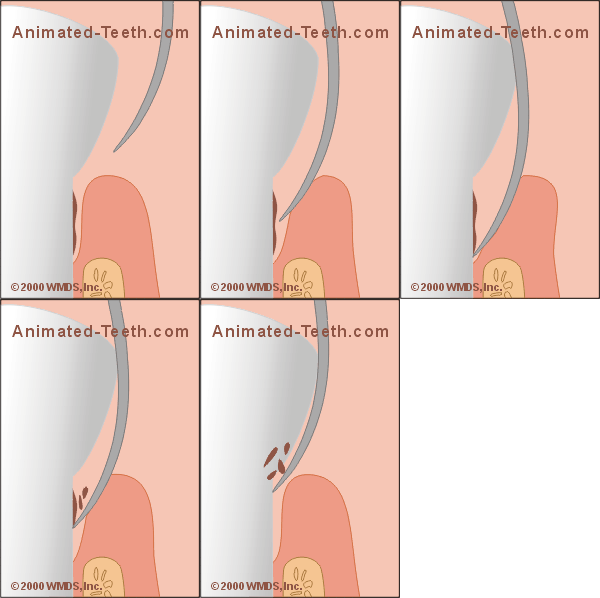
The types of bacteria that cause bad breath live within the biofilm (dental plaque) that builds up on and around teeth, both above and below the gum line.
Flossing removes smelly bacteria that live below the gum line.
- Disrupt and dislodge existing colonies of bacteria that are actively producing smelly VSC’s.
- Reduce available living space for continued colony growth, and the accompanying proliferation of their numbers.
Overall, the greater the number of these bacteria that get brushed and flossed away, the lower the level of VSC’s in your mouth, and thus the fresher your breath will be.
Brushing and flossing guidelines.
When it comes to cleaning your teeth, nothing special beyond what you should normally be doing is really needed. But there are a few things to know or consider.
- It’s important to both brush and floss. It’s not realistic to think that smells coming from around teeth can be controlled unless effective flossing is an integral part of the person’s daily oral home care.
- A part of effective flossing technique involves doing so “subgingivally.” How to. (That term means to use the floss in a manner where it effectively cleans below the gum line.)
When gum disease is present, below the gum line plaque accumulation can be an especially troublesome/difficult factor in combating halitosis (discussed below).
- Some people feel that using an electric toothbrush helps them to be a more effective brusher. That may be true for them but there’s no overwhelming body of scientific evidence that shows that using a powered brush is better than a manual one. Surprised?
At the same time, there’s no reason not to use an electric. And doing so can provide some behavioral benefits (brushing is more fun, you may brush longer, etc…).
If you’re interested, we feature pages that periodically review these devices. – What are the best Sonicare toothbrushes? Choice factors. | What are the best Oral-b rechargeables? Choice factors.
Why do I still have bad breath, even after brushing and flossing?
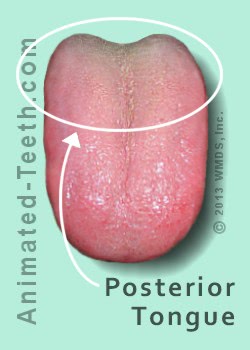
Performing traditional oral home care only cleans a portion of your mouth. In most cases, what’s vitally needed is to clean your tongue too because it typically harbors the largest congregation of halitosis-causing bacteria in your mouth.
Nothing is more important than cleaning the back part of the dorsum (top surface) of your tongue.
b) Cleaning your tongue – Nothing is more important!
This is absolutely the most important step you can take.
- If you need evidence of this fact, read the contents of the “Research on this matter” box below.
- The issue of tongue cleaning is so important that we felt it necessary to dedicate an entire page to this subject alone.
Here it is: Why cleaning your tongue is usually the most important step in curing halitosis. Directions | Pictures
Research on this matter.
Study #1) A study by Washio analyzed the types of bacteria living in the biofilm accumulation on the surface of test subject’s tongues. (None of the subjects had severe gum disease, which would have been a complicating issue for this study.)
The primary species of odor-causing (VSC producing) bacteria discovered in the film were Veillonella, Actinomyces, and Prevotella. This was true for both subjects that did, and did not, have significant breath problems.
The test subjects that had oral malodor had significantly higher numbers of these kinds of bacteria (their density within the film was greater), although the total quantity of coating in both groups was similar.
This suggests that bad breath can be controlled by limiting the number of VSC-producing bacteria found on a person’s tongue. (One way of doing this is via tongue cleaning, which simply removes the film, and hence the offending bacteria, altogether.)
Study #2) Another study (Pham), evaluated the effectiveness of tongue cleaning in curing halitosis in test subjects that had significant vs. minor involvement with gum disease (periodontitis vs. gingivitis).
- It determined that tongue cleaning alone made statistically significant reductions in malodor levels in both groups.
- With the minor (gingivitis) group, tongue cleaning alone was able to lower malodor test scores to below what is considered normal (non-offensive) levels.
[Malodor testing used: Hydrogen sulfide concentration, methyl mercaptan concentration, organoleptic evaluation (smell test).]
The study concluded by stating that with the gingivitis subjects, tongue cleaning alone could serve as the primary approach to reducing their oral odors.
[The assumption here is that tongue cleaning alone would also be an effective treatment for people who didn’t have the complicating issue of gingivitis.]
▲ Section references – Washio, Pham
c) Oral rinses.
You may choose to include the use of a mouthwash or rinse in your home-care routine. As benefits, the best ones have antibacterial and VSC-neutralizing properties. (6 effective (research-proven) mouthwash ingredients for treating bad breath. Our list.)
But don’t rely on these kinds of products alone.
Previously we stated that if a rinse is used, it’s better to consider it an adjunct rather than the primary method of controlling your bad breath.
Here’s why:
- Most rinses have a tough time penetrating deep into oral films. And that makes it difficult for them to be effective.
(The bacteria living on or near the biofilm’s surface receive the treatment. Those living in its deepest recess receive less, or possibly even no, effect.)
- In comparison, the mechanical disruption/removal of oral films by brushing, flossing and tongue scraping is quite predictable and unquestionably effective.
Our rationale.
We’re not suggesting that none of these products have any value. But we’ve yet to see one that’s been evaluated as extensively and in as many research studies as regular mouth cleaning alone, which has been documented as being an effective cure.
We also find it humorous that the directions for use for many of these products (often sold bundled with other items as “kits”) include instructions to perform thorough oral home care. (Just like diet supplement and meal plans mention you should exercise too.)
So you might hold off on the impulse buy of these kinds of products until you’ve tried what you can just do on your own first.
2) Limiting the food supply for bacteria.
The volatile sulfur compounds that cause bad breath are the waste byproducts created by anaerobic oral bacteria as they digest proteins.
With that information, it’s easy to understand why it’s important to thoroughly clean your mouth after eating. Especially if the type of food you’ve had has a high protein content. Examples.
What takes place.
After we’ve finished eating, minute particles of food still remain in our mouth. And a lot of this debris ends up in between our teeth, and incorporated into the coating found on the back part of our tongue.
Since these are precisely the locations where the bacteria that cause bad breath tend to live, if a person doesn’t clean their mouth thoroughly and promptly, food is provided for them over an extended period of time.
With this newfound food supply, bacterial and VSC levels will tend to increase, along with the intensity of the person’s breath odor.
Dental cleanings remove tartar and debris that you can’t.
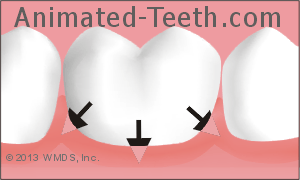
“Deep cleanings” focus on removing tartar located far below the gum line.
3) Making sure your mouth is healthy.
During your appointment, the following issues can be addressed …
2) Dental calculus (tartar) frequently does have an association with bad breath. Your dental cleaning will remove this debris from your teeth, both above and below the gum line.
Does tartar cause bad breath?
Yes and no. It’s not specifically the tartar itself that causes a person’s halitosis but instead the odor-causing bacteria that live on and around it that do.
- Tartar accumulation creates additional locations where smelly bacterial colonies can accumulate.
(So yes, tartar does smell. But because of the bacteria that live on it, and the stinky compounds it has absorbed from them.)
- Its irregular shape makes brushing and flossing effectively more difficult, if not impossible. Thus aggravating the person’s breath condition and interfering with its cure.
- The presence of tartar and its associated bacterial colonies is a causative factor in the development of periodontal disease (advanced gum disease), a disease known to be associated with breath odors.
3) A part of your examination will include a periodontal evaluation.
Healthy vs. diseased gums.
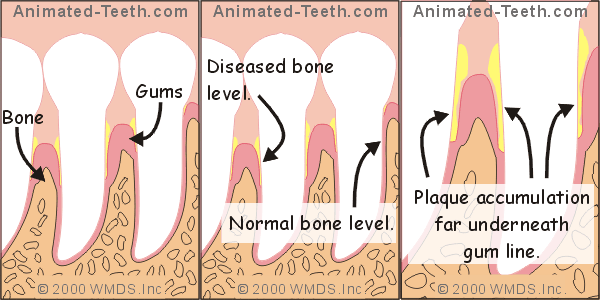
Gum disease creates pockets that harbor smelly bacteria.
Periodontal disease.
- It’s effects can cause significant damage to your gums and the bone that surrounds them (like gum recession and bone loss, see animation).
- This damage can result in the creation of deep spaces between your teeth called “periodontal pockets.”
- These pockets are often impossible for you to clean thoroughly/effectively, and therefore make an ideal environment for the bacteria that cause bad breath to live.
Treatment will be needed.
Treatment typically starts off with “deep cleanings” (periodontal scaling), so to remove tartar, plaque and debris that has accumulated around your teeth deep under your gum line. After evaluating your progress following that step, additional treatment (like gum surgery) may be required.
What does periodontal therapy accomplish?
At the completion of a patient’s treatment (deep cleanings and possibly gum surgery) their periodontal pockets will no longer exist, thus making it possible for them to brush and floss effectively. This ability, combined with tongue cleaning, should resolve their halitosis. As evidence:
- The Pham study referenced above found that when periodontitis was present, initiating a regimen of tongue cleaning did make a statistically significant improvement in the person’s breath quality. But it took resolving the patient’s condition before the patient’s odor levels fell to non-offensive levels.
- The presence of periodontitis could also explain the situation where after brushing, flossing and cleaning their tongue a person finds that their bad breath persists.
▲ Section references – Pham
4) During your examination, your dentist will check to see if there are any untreated dental conditions Examples. that could be causing or aggravating your breath problems.
5) Your dentist can determine if it’s unlikely that oral conditions are the cause of your bad breath and that a referral to a doctor for a medical evaluation What to look for. is indicated.
These latter two issues/complications could also be explanations for the situation where a person’s bad breath remains, even after performing effective brushing, flossing and tongue cleaning.
Keeping your mouth hydrated can help.
Oral moisture (both the liquids that you drink and the saliva that you produce) helps to wash away bacteria living in the mouth, and wash out and dilute the smelly compounds they’ve created. (Having a chronically dry mouth is a risk factor for bad breath. What takes place.)
On a daily basis, here are some of the things that you can do to keep your mouth moist.
1) Drink plenty of water.
If you allow yourself to become dehydrated, your body will attempt to conserve moisture by way of reducing its production of saliva.
2) Create water exposures throughout the day.
Rinsing frequently with water can help to control odors over the short-term by way of removing and diluting bacterial waste products.
Doing so will also tend to dislodge and rinse away the bacteria themselves, as well as food debris that might otherwise have become a food source for them.
▲ Section references – Bartold
3) Stimulate your mouth’s flow of saliva.
One way to stimulate salivary flow, and therefore increase oral moisture, is to chew on something.
- Placing something in your mouth will trick your body into thinking that it’s getting a meal.
- In preparation for digesting this meal, your body will increase its production of saliva.
Suggestions.
You might chew on clove buds, fennel seeds, or a piece of mint or parsley.
Chewing gum, breath mints, or lozenges Aids in treating bad breath., can also be used to stimulate salivary flow. (If you elect to use one of these products, make sure it is sugar-free since sweets will promote the growth of bacteria that cause tooth decay.)
Our next page explains what’s needed when cleaning your tongue. Directions. (The step that’s so vital in curing bad breath.)
Or while not as important in treating most cases, you might be more interested in our page: Mouthwash brands proven by research to be effective for treating bad breath. The list.
Last reviewed: May 06, 2025
Author: Paul Cotner, DMD — retired dentist.
Published by: WMDS, Inc. — owner of Animated-Teeth.com.
Educational information only — not a substitute for professional dental care.
Page references sources:
Bartold M. Update on Breath malodor.
Gera I. The bacterial biofilm and the possibilities of chemical plaque control. Literature review.
Pham TAV, et al. Clinical trial of oral malodor treatment in patients with periodontal diseases.
Washio J, et al. Hydrogen sulfide-producing bacteria in tongue biofilm and their relationship with oral malodour.