Looking for information about other Dental Topics?
Full Website Index• Animated-Teeth.com •

Invisalign® – Managing difficulties with speech and pain. Rules for drinking and eating.
During the course of their Invisalign® treatment (or any other brand of removable aligner therapy), it’s common for a patient to experience various minor problems or hassles associated with wearing their appliances.
Some of these, like difficulties with speaking or aligner pain, simply need to be understood and then managed. With other issues, like consuming foods and beverages, there are some basic rules and best practices that need to be kept in mind so you don’t do something that causes problems. This page explains.
Table of contents.
1) Invisalign® speech problems. / How to cure an Invisalign® lisp.
– How likely is it that your aligners will cause difficulty with speaking? How long will the problem persist? | How to overcome speech problems.
2) Issues and concerns associated with consuming drinks & beverages.
– General rules and precautions. | Is drinking coffee, tea, red wine, or soda permitted? What drinks are acceptable? | Aligner warping (from hot beverages). | Aligner staining. | Risk for tooth decay. | Teeth staining.
3) Can you eat while wearing Invisalign® aligners? / How about chewing gum?
– Reasons why you shouldn’t eat while wearing your aligners. (And reasons why your dentist might suggest that you should.) | How having Invisalign® treatment may change your eating habits. | Ways to minimize eating discomfort.
4) Does wearing Invisalign® hurt?
– Aligner fit and tooth movement pain. | Soft-tissue (gums, cheeks, tongue, floor of mouth) irritation. | Remedies for managing the discomfort caused by aligners. | Considerations in deciding which OTC pain reliever to use.
1) Speech difficulties with Invisalign®.
a) How common is this problem?Background.
Wearing any type of dental appliance has the potential to affect the way a person speaks. In most cases, this has to do with the extra amount of thickness the appliance adds to the roof of their mouth (the anterior palate), or the backside of their upper front teeth.
What’s different about wearing Invisalign®?
In comparison to other types of dental appliances, removable orthodontic aligners are made out of very thin plastic that only covers over tooth surfaces, and they fit very snugly on the teeth.
Due to these characteristics, very little actual thickness is added. And for that reason, most people don’t encounter any significant speech problems when wearing their aligners. Admittedly, however, for those that do it can be one of the tip-offs that they are wearing invisible braces. Additional signs.
1) What’s normal?
Probably everyone notices at least some difference or awkwardness in the way they talk when they put in their first set of aligners for the first time.
- It’s not unusual to notice a slight lisp or slur when speaking.
- These effects are usually most obvious when trying to pronounce words that contain “s” and “th” sounds.
Research.
A study by Nedwed polled Invisalign® patients and determined that 93% of them experienced no speech impairment during the first 3 to 6 months of their treatment.
(This period, the initial portion of a patient’s treatment, is when speech problems would be expected to be most noticeable.)
This finding does imply that 7% did have some level of difficulty, which isn’t necessarily a small percentage.
2) How long will the speech difficulties persist?
Probably for most people, the issue that’s most important to them is if they do experience problems talking, how long will they last?
Research.
As an answer, Nedwed reported that 46% of Invisalign® patients had no lasting difficulty with speaking.
Extrapolating from the two findings we’ve reported from this same study, it seems that possibly 3% or so of all Invisalign® patients will experience a persistent speech impairment associated with wearing their aligners.
b) How to cure Invisalign® speech problems.
If you do detect a change in the way you speak when you wear your aligners, the question then becomes one of how quickly can you adapt to and overcome it before anyone else notices.
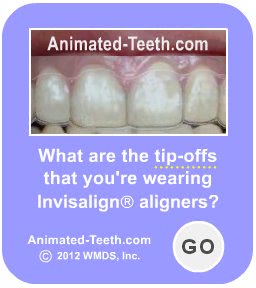
A change in the way you speak can be a tip-off that you’re wearing Invisalign®.
1) In most cases, the problem will resolve quickly.
2) The remedy for an Invisalign® lisp is practice.
The solution for overcoming aligner speech problems is to simply practice your enunciation of words. And of course, especially those that you have the most difficulty with.
That means you just need to do a lot of rehearsing. And the more that you do, the quicker you’ll adapt.
For example, read aloud to yourself. Or have extended conversations with a sympathetic friend. After doing so, and hopefully before you know it, the way you talk will have returned to normal.
3) You may feel that your lisp is still there.
Per the Nedwed study mentioned above, a relatively small percentage of patients will probably experience persistent speech problems. And if that’s the case for you, keep in mind that for very special occasions (like a talk, speech, or toast) you do have the option that you can just take your aligners out.
Don’t overlook that what you think is especially horrendous may not really be all that noticeable at all. Our perception of things isn’t always accurate. So, ask a friend that you trust about the way you talk when your aligners are in place, and believe them if they say everything sounds fine.
4) Switching to a new set of aligners shouldn’t pose a problem.
Since each Invisalign® aligner is so similar in shape and thickness to the one worn immediately before it, the new one’s potential to trigger speech problems should be essentially nonexistent.
Attachments.
The exception might be the point when Invisalign® attachments Details. | Pictures. are first utilized with your case (they’re not always required). These lumps of dental composite (white filling material) are placed so to help your aligners direct their forces more effectively.
The usual application is one where the attachments are placed on the side of your teeth that show (their facial/buccal surface). And if that’s the situation with your case, any effect that they have on the way that you speak should just be minor and transient.
2) Issues with consuming beverages while wearing Invisalign®
What beverages can you drink while wearing Invisalign®?
Drinking anything other than just water is not recommended.
▲ Section references – Invisalign
So yes, that generally means that soda, tea, coffee, fruit drinks, and the like should be avoided (of course only while wearing your aligners). And while that recommendation may seem disappointingly limited, this page outlines much of the reasoning that lies behind it.
There may be some wiggle room.
While blindly following Invisalign’s® advice is a best practice, once you understand the issues and concerns their recommendation is based on, you’ll likely find that there can be a little leeway in exactly what you do. We explain below.
Reasons why you shouldn’t consume beverages while wearing Invisalign®.
In general, the kinds of problems associated with drinking beverages other than just cool water tend to fall into the following two categories. They are:
- Adverse effects that the drink might have on aspects of the Invisalign® system, such as aligner warping or staining, or affecting the properties of its plastic.
- Or else effects that the drink may have on your teeth, such as staining or increasing your risk for tooth decay.
More about the Invisalign® experience.
- What it’s like for you –
Eating, Drinking, Talking, Pain - How it looks –
Appearance (tip-offs), Staining, Cleaning options. - How it works –
Tooth movement, Treatment details.
A) Possible adverse effects to your aligners caused by consuming beverages –
1) Effects due to exposure to hot beverages.
The basis of the concern.
The primary issues at hand seem to center around these points:
- The potential exposure to a hot beverage may have in causing physical distortion or warping of your appliances.
- A possible change in physical characteristics of your aligner’s plastic due to experiencing thermal cycling (repeated exposure to high-temperature events).
a) Aligner warping / distortion caused by hot beverages.
Background.
As a local event (like the initial contact of a beverage with an Invisalign® aligner), hot coffee is frequently served at a temperature of 71 degrees C (160 degrees F) to 85 degrees C (185 degrees F).
The concern.
- Invisalign® appliances are made out of thin plastic. (This goes for other brands too, like ClearCorrect®, ClearPath®, eCligner®, Simpli 5®, as well as clear plastic orthodontic retainers like Vivera® and Essix.)
- When they’re made, a sheet of the plastic is first heat-softened, and then vacuum-formed (sucked down) over a model of the patient’s teeth, thus giving the aligner its precise shape.
So just like when your appliances were made, when you drink something hot and create a high-temperature environment in your mouth, a concern is if this type of exposure can create some level of aligner distortion.
Is this really a problem?
We couldn’t find a research study that specifically mentioned that exposure to hot beverages, like coffee, could cause aligner distortion or warping.
- In researching this subject, we came to the conclusion that even direct exposure to coffee served in the range of 160 to 185 degrees F would fall below the temperature at which the plastic was originally heated to form the aligner.
- There’s also the point that the type of plastics most frequently used to fabricate aligners nowadays are thermoset materials as opposed to thermoplastic. The latter will continually soften up when heated, all of the way to a liquid state. Thermoset plastics in comparison remain in a permanent solid form and have a reputation for increased dimensional stability and heat resistance.
(It does seem clear that elevated temperatures associated with direct sunlight, curling irons, etc… have fairly frequently been reported as the cause of aligner warping).
Even minor distortion can be a big issue.
Of course, the problem at hand is that any distortion that does occur may be essentially impossible to identify. And since it’s the snug fit of your aligners over your teeth that creates the orthodontic forces needed to move them, even a minor amount of warping could render one unable to accomplish its full task.
(Each individual aligner is typically designed to create just .25 to .33 mm of tooth movement, which is on the order of about 100th of an inch.)
Best practices associated with the issue of hot drinks and aligner warping.
- It’s easy enough to say that avoiding hot beverages while wearing your appliances makes the least worrisome and most predictable practice.
- It would be our conjecture that especially when thermoset plastics are involved (like Invisalign®), experiencing a few isolated events can be tolerated.
b) Changes in aligner physical characteristics due to thermal cycling.
Background.
The molecules that make up the kinds of plastics that are used to make orthodontic aligners have some degree of crystalline structure. The precise level of crystallinity involved influences the plastic’s physical characteristics, like its hardness and elasticity, which in turn correlates with the effectiveness of the appliance in moving the patient’s teeth.
Research findings.
- A study by Kwon evaluated the effects of thermocycling (5 to 55 degrees C) for a period simulating over a month of appliance wear. At the completion of the period, the study found no evidence that the force delivery properties of the plastic had deteriorated.
(As reference points, oral temperatures have been documented to rise to 57 degrees C when hot beverages are consumed. Hot coffee is frequently served at a temperature above 71 degrees C. Note that both of these levels lie above the range studied.)
- In comparison, a study by Iijima also evaluated the effects of thermocycling between the extremes of 5 to 55 degrees C during simulated long-term wear. This study, however, found that the forces generated by the appliances did decrease with thermocycling, especially when higher temperatures were involved.
▲ Section references – Kwon, Iijiam, Wenger
Neither these studies nor our reporting here should be considered a definitive statement on this issue.
- When it comes to removable orthodontic aligner systems, proprietary plastics are frequently involved (so the information from these studies may not extrapolate to many systems).
- Both of the studies evaluated thermoplastic materials, whereas the more current trend is to use thermoset ones and the nature of their crystallinity (molecular crosslinking) is different.
Best practices associated with the issue of hot drinks and thermal cycling effects.
- Similar to above, it’s easy enough to suggest that avoiding hot beverages while wearing your appliances makes the least worrisome and most predictable practice.
- It would be our conjecture that especially when thermoset plastics are involved (like Invisalign®), experiencing a few isolated events can be tolerated.
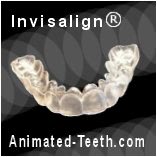
Removable tooth aligners may warp when exposed to hot beverages.
Prevention / Minimizing your potential for aligner warpage.
Hot drinks abstinence
- When you do plan to enjoy a hot beverage, cool it down (iced coffee is a thing, and clearly iced tea is too).
As a very safe rule of thumb, when wearing your aligners be hesitant to place anything in your mouth that’s warmer than your body’s temperature.
(Note: This plan overlooks many of the additional beverage-related issues discussed below.)
- Or just take your Invisalign® aligners out (as you really should anyway).
Using a straw probably isn’t a complete alternative.
Some people might be tempted to use a straw when they drink hot beverages, thinking that that offers a solution.
The problem we envision with this plan is simply that it still seems possible that the tongue-side portion of a person’s aligners covering their rear-most teeth (molars) could still be exposed to the beverage’s elevated temperature.
Solutions for aligner warpage.
Unfortunately, there really aren’t any. Once the problem has been discovered (possibly the fit of your aligner has noticeably changed, or your next set of aligners doesn’t fit as expected), new aligners will need to be made. That will be an added expense for you.
2) Aligner staining.
Beverages that have a strong color will tend to stain your Invisalign® aligners. The effect isn’t usually immediate but instead forms gradually as repeated exposures to the drink occur.
Dark beverages tend to cause more of an effect. This includes colas, black tea, coffee, and red wine. But really, any type of beverage that has a strong tint, especially if consumed frequently or sipped for extended periods, will have the potential to cause aligner discoloration.
Prevention / Minimizing your potential for aligner staining.
Abstinence
Of course, the easiest way to prevent staining from forming is to simply follow Invisalign’s® guidelines and restrain from drinking anything other than just cool water while your aligners are in.
You don’t have to give up enjoying your favorite drinks. Just don’t consume them while wearing your aligners, which seems a simple enough rule to follow.
Other remedies and solutions.
It seems many patients aren’t so inclined to strictly adhere to Invisalign’s® recommendation. And even we would agree that there’s probably some wiggle room in exactly what you do.
As coverage for this subject, we’ve created a dedicated page: Stain issues associated with the Invisalign® system. Causes and solutions
B) Possible adverse effects to your teeth caused by consuming beverages while wearing Invisalign® –
When you wear your Invisalign® appliances, they tend to create a barrier between your teeth and the rest of your mouth. And due to this isolation, the harmful effects of some types of drinks on your teeth may be amplified.
1) Problems with sugary beverages.
Background.
Saliva provides some beneficial functions for your teeth:
- It creates a washing and cleansing effect for them.
- It dilutes and buffers bacterial byproducts that can cause cavities. Tooth demineralization.
- The minerals it contains play an important role in tooth remineralization Enamel repair., a mechanism that helps to reverse damage caused by demineralization.
Unfortunately, when you wear your orthodontic aligners, the barrier they create inhibits these actions.
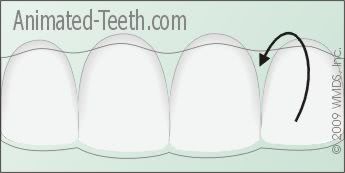
Sugary drinks that seep inside your aligner can promote tooth decay.
An example.
Take the situation where a sugary drink (soda, fruit juice, alcoholic beverage, sweet tea, sweetened coffee, etc…) is consumed while a person is wearing their appliances.
- At least some of the beverage will seep into the internal aspect of their aligners …
- And once it has, it becomes a food source for the cavity-causing bacteria living in the dental plaque on and around the encased teeth.
Since the presence of the aligner acts as a barrier and therefore inhibits the movement of saliva, the tooth-damaging acids created by the bacteria won’t be diluted and neutralized as effectively, and any potential for remineralization will be inhibited. As a result, the net effect can be one where the environment within the aligners is tipped towards active tooth decay formation.
▲ Section references – Birdsall
Preventive steps you can take.
Rinse out with water afterward.
If you must drink a sugary beverage while wearing your aligners, afterward take them out and rinse both them and your mouth with water to dilute and wash away any remaining amounts of the drink.
The plot of the Stephan Curve View graph. illustrates that it just takes a few minutes after exposure to sugar for oral conditions to swing to one that favors cavity formation, so be prompt.
Issues concerning the use of a straw.
Some people may be under the impression that the use of a straw can help to avoid the risks associated with drinking sweetened beverages when their orthodontic aligners are in.
In agreement with this thought, we can see how if the straw is positioned far enough back that a large percentage of the beverage might be funneled directly past their oral cavity. And we don’t see how that could be a bad thing.
But it must be kept in mind that the oral environment is a wet one. And despite the use of a straw, in all cases, there will be some co-mingling of saliva and the sugary beverage. And ultimately it will be distributed throughout the person’s mouth, including within their aligners.
2) Problems with acidic beverages.
Acidic drinks, like soda and some kinds of fruit juices, can leach mineral content from teeth. A person’s potential for experiencing this type of damage is simply a function of how acidic the drink is and how long the tooth is exposed to it.
In those cases where an acidic beverage is consumed while a person is wearing their orthodontic aligners, at least some amount of it will pool inside them. In regard to whatever amount does:
- Because the aligners act as a barrier to the flow of saliva around the teeth they cover over, the drink’s concentration will not be as effectively buffered and diluted by it.
- Once inside the aligners, the acidic drink will be held in close contact with the teeth, possibly for a prolonged period of time.
Both of these issues mean, at least in theory, that drinking an acidic beverage while wearing aligners will tend to amplify the tooth-eroding potential of that beverage.
Preventive steps you can take.
Rinse out with water afterward.
If you must drink an acidic beverage while wearing your aligners (soda would be a common concern), when you’re finished take them out and rinse them and your mouth with water to dilute and wash away any remaining portions of the drink.
Remember, the level of damage that occurs is simply cause and effect (higher acid levels + longer exposure = more tooth erosion). So the sooner you dilute and/or rinse away the drink’s remnants, the better.
Using a straw may help.
When you consume an acidic beverage, your goal should be one of minimizing your mouth’s exposure to it, both in terms of duration and concentration. And towards this goal, we can see how using a straw might help.
Especially if positioned toward the rear of your mouth far enough, the straw will help to shunt a great amount of the acidic solution on past your oral cavity. And the less total volume of acidic drink in your mouth, the less acidic it will become.
Even with the use of a straw, there will still be co-mingling of the acid with your saliva (just like with our sugar example above). So, you’ll still need to take your aligners out and rinse both them and your mouth afterward so to remove and dilute all traces of the drink. But overall, it seems that the use of a straw could lessen the full damaging potential of the beverage.
Drinking water when wearing Invisalign® is encouraged.
Sipping cool water while wearing your Invisalign® aligners is OK and in fact, makes a great idea.
There’s no potential for it to stain or warp your aligners. And any water that does seep inside of them will only help to dilute and flush away bacteria and their byproducts that might cause harm to your teeth or gums.
You don’t have to give up your favorite beverages.
Of course, you can still continue to enjoy a cup of coffee or tea, a soda, or even some red wine whenever you want. Just take your aligners out first.
Then, once you’re finished, clean your teeth as is appropriate (brush and floss if you’ve eaten something, and rinse out with water) and then reinsert your appliances so your treatment progress continues.
3) What are Invisalign®’s recommendations about eating?The official word stated on Invisalign.com is that your aligners should be removed “for all meals and snacks, including gum.”
▲ Invisalign
Why this recommendation?
While the Invisalign® website doesn’t go into detail, the underlying basis of their recommendation has to do with the risks involved. Some of these risks involve potential damage to your aligners. Others are related to possible risks to your teeth and gums. We explain scenarios associated with each concern below.
Are there any exceptions?
Yes, possibly. Despite Invisalign’s® blanket recommendation, some dentists feel that the risks involved with wearing your aligners while you eat are overshadowed by the benefits that doing so can provide (we explain below). So per your dentist’s instructions, possibly eating while your aligners are in is OK.
Other things to know about eating and Invisalign®.
Whether you end up eating with your aligners in place during your treatment or not, there are some basic food-related issues that will tend to affect you either way.
This includes things like the way you eat, when you eat, or the types of foods you’ll likely want to consume. There’s also the issue of eating discomfort, once again, whether your aligners are left in or out.
We cover all of these issues below and provide tips and pointers that should be able to help you out.
A) Reasons why you shouldn’t eat with Invisalign® in place.
1) You might damage your aligners.
This is probably the reason that’s most obvious to most people. While Invisalign® tooth aligners are durable and strong, they’re just made out of thin plastic. And when they’re exposed to chewing forces, it’s possible to crack, break or distort them.
Other issues.
Beyond just obvious damage, subjecting your aligners to chewing forces may affect them in other ways too:
- A study by Schuster suggested that aligner exposure to chewing forces led to an increase in appliance stiffness. (Due to a resulting change in the crystalline structure of the aligner’s plastic.) This stiffening effect resulted in less force being exerted by the appliance onto the patient’s teeth.
- A study by Bradley found that constant aligner exposure to the forces generated by opposing teeth led to aligner deformation, which resulted in a weakening of force exerted by the appliance.
▲ Section references – Schuster, Bradley
The fit of each and every aligner is important.
Any type of damage that does occur that affects an aligner’s fit will also affect the effectiveness with which it’s able to create tooth movements. How aligners work. And when an aligner has been seriously compromised, the aligner will no longer be able to accomplish the specific aspect of your treatment process that it was designed to accomplish.
If that’s what’s happened, the aligner will have to be replaced because no other one can substitute. And a patient’s pre-made series of aligners All delivered together. doesn’t come with spares.
Having the new one made means you’ll experience treatment delay and added expense. So if aligner damage happens often enough, the progress of your case can really start to bog down and become just that much more expensive.
Why look for trouble, just take your aligners out when you eat.
One of the biggest advantages of the Invisalign® system is the fact that you can take your aligners out anytime you want, which means that you can maintain your regular diet with no problem at all.
And doing so helps to protect your aligners, therefore helping to ensure that your case progresses as smoothly as possible.
2) Eating with your aligners in place isn’t that pleasant.
If you do try to eat food while wearing your aligners, it’s unlikely that you’ll find the experience all that easy, or satisfying.
- You’ll probably find that the food wants to stick to them or gum them up in a significant way.
- You may find that eating at home is passable. But doing so in public tends to create a bit of a spectacle.
3) You’ll still need to clean your aligners.
Even if you don’t take your aligners out to eat, once you’ve finished your meal or snack you absolutely will have to remove them so you can clean them Recommended methods., along with your teeth too.
- Any debris that’s accumulated in and around your aligners will be unsightly and foul.
- If your aligners and teeth are not cleansed thoroughly, the accumulated food debris in them, and the associated dental plaque that will ultimately form, will place you at increased risk for cavities Here’s why. and gum tissue inflammation.
This latter point, especially in regard to tooth decay, is a big issue. Being embarrassed by food that’s trapped in your aligners is one thing. But if you allow cavities to form, doing so will have permanently affected your teeth for the remainder of your life. That’s a tragedy considering how easily the situation could have been avoided.
B) Why do some dentists say it’s OK to eat with your aligners in place?
Despite the concerns we’ve mentioned above, some dentists specifically tell their patients that it’s all right for them to wear their aligners when they eat, and in fact that they should.
While this recommendation may seem curious to you (considering the risks involved), doing so can provide some benefits. They include:
- You’ll be able to wear your aligners just that much more each day. – While the amount of time you spend eating may not be a lot, anytime your aligners aren’t being worn your case can’t progress. So by eating with them in, you’ll gain a little extra treatment time each day.
- Chewing with your aligners in place helps them to seat better. – It’s the fit of your aligners over your teeth How aligners work. that creates and directs tooth movements. And the pressure you place on them as you eat tends to force them down and therefore helps to ensure this fit. As a result, your case will tend to progress more rapidly and predictably.
Make sure you follow all of your dentist’s instructions.
Some patients are quick to hear their dentist say it’s OK for them to eat with their aligners in but fail to hear the remainder of the instructions they have been given.
- You’ll still need to remove your aligners after you eat and clean both them and your teeth. – There is no exception to this rule. Eating foods with your aligners in place is a risky proposition in regard to maintaining your oral health.
Cleaning up after eating with your aligners in will probably be more of a task than if they had been removed. And it needs to be performed promptly (the longer you wait, the longer the conditions that form cavities will persist). So if this is the approach you are using, be prepared to bring your A-game.
- Ask your dentist if there are some types of foods you should avoid. – Comparatively hard foods (raw carrots, nuts, etc…), and the forces needed to chew them, will place your aligners at comparatively greater risk for damage, so your dentist may ask you to avoid them.
C) Can you chew gum while wearing Invisalign®?
You’ll find that chewing gum with your aligners in place makes a poor choice.
- The gum will tend to stick to its surface. It will be time-consuming and messy to remove.
- In no way were your aligners designed to withstand the kind of abuse that chewing gum creates. And doing so will likely end up ruining one or both of them.
(Keep in mind, if you damage even just one aligner, replacing it is an involved and costly process.)
- The official word on Invisalign.com is that your aligners should be removed “for all meals and snacks, including gum.”
▲ Section references – Invisalign
D) Wearing Invisalign® will likely change the way that you eat.
One of the great conveniences of having Invisalign® treatment is that you can simply take your aligners out. So as compared to traditional braces, your eating activities may not have to change all that drastically.
However, despite this convenience most patients still find that they need to alter their standard eating habits, at least somewhat.
Research.
Subject responses to a questionnaire in a study by Azaripour found that 70% of respondents who had fixed (traditional) braces reported that their eating habits had changed (no surprise). But 50% of subjects undergoing removable aligner therapy reported the same thing.
▲ Section references – Azaripour, Shalish
While neither of these studies elaborated extensively on what types of eating changes were experienced, here are some of the issues you may discover.
1) You may decide to eat less frequently.
Having Invisalign® may change your mind about how often you choose to eat. That’s because after every meal or snack you’ll need to clean both your teeth and aligners and that can take a bit of time and effort.
So to make your life simpler, you may decide to change your eating habits from frequent snacking to a routine of larger, less frequent, meals.
2) At times, softer foods may be needed.
Teeth tenderness.
During the course of your treatment, you’ll probably find that there are periods when your teeth are especially tender and sore. (Like during those first few days when you switch to a new set of aligners.)
During these periods, you may need to shy away from hard foods (that require relatively more biting pressure) in favor of comparatively softer foods.
Food packing.
A study by Pacheco-Pereira found that 25% of patients who wore a removable aligner system reported that food packing between their teeth when they ate was a problem.
▲ Section references – Pacheco-Pereira
3) Food temperature may be an issue.
Having orthodontic treatment can result in periods when a person’s teeth are more sensitive to hot and cold temperature extremes than they otherwise would normally be.
The Pacheco-Pereira study cited above found that this occurred with 16% of removable orthodontic aligner patients. For this reason, you may find that you need to moderate the temperature of foods and beverages before consuming them.
E) Suggestions for minimizing eating discomfort.
Here are two suggestions for Invisalign® patients who find that they experience (at least from time to time) tenderness with their teeth when trying to eat.
- Start the use of each new set of aligners at bedtime. This way your teeth will have several hours to get used to their fit and settle down before your next meal.
- During those periods when the pain associated with eating is especially severe, you may find that taking an OTC analgesic is needed.
Generally, Tylenol makes a more appropriate choice than most other OTC pain relievers. (This link discusses how your choice of an analgesic might affect the progress of your case. NSAID effects.) So check with your dentist to see what they recommend.
Note: Consult your healthcare professional before taking any medication to confirm that it’s safe and appropriate for your use. Use medications only as directed.
4) Types of pain commonly associated with having Invisalign® treatment.
Does wearing Invisalign® hurt?
You don’t necessarily have to expect that having Invisalign® treatment will be painful. But at the same time, it’s not realistic to presume that your aligners, or the tooth movements they create, won’t cause some minor aches or pains from time to time.
What types of discomfort are common?
So to give you an idea of what to expect, we’ve broken this topic down into categories, with each one providing some simple remedies and solutions.
- Aligner fit and tooth movement pain.
- Soft tissue irritation (gums, cheeks, tongue, floor of mouth).
- Discomfort when eating.
A) Aligner fit / tooth movement pain.
About half of all Invisalign® patients report that they experience at least some minor pain or discomfort during the course of their treatment. It’s often described as a sense of pressure or tenderness.
- The type or level of pain you experience while wearing one set of aligners may be different than with the next.
- Any one aligner may irritate all of the teeth it covers, groups of adjacent teeth, or just individual ones in isolated locations.
- The discomfort may be something that you notice while you wear your aligners…
… or it may just be triggered when you take them in and out.
Feeling pressure is a sign that your aligners are working.
For the most part, the discomfort that you notice is simply evidence that the pressure needed to realign your teeth is in fact being generated.
Experiencing it may not be fun, but it’s a needed part of the process.
[Use this link for more details: How do Invisalign® aligners create tooth movement? Here’s how.]
1) What are the chances that you’ll have pain?
To give you an idea of what to expect, a study by Nedwed polled a group of Invisalign® patients during their initial three to six months of treatment.
- 35% of the patients reported that they had no discomfort related to wearing their aligners.
- However, 54% did experience what they considered to be mild pain.
A study by Fujiyama compared the experience of Invisalign® patients and those being treated with traditional braces during the initial weeks of their treatment. (Periods at which archwires and aligner sets were changed were compared.)
- Generally, the pain experienced by the Invisalign® patients was about 1/2 that of the traditional braces group. (Intensity of pain, overall discomfort level, number of days of pain.)
- When advancing to a new set of aligners, on average the Invisalign® patients tended to experience pain rated at 3 (1 to 10 basis), for a period of 2 days.
- However, the study did note that 11% of Invisalign® subjects did complain of significant pain or discomfort.
▲ Nedwed, Fujiyama
2) You’ll probably have the most discomfort when you switch to a new set of aligners.
The discrepancy between the shape of an aligner and the current alignment of your teeth will be greatest when you first start wearing the appliance.
Then, over time as your teeth begin to shift and conform, the fit of the aligner will become more relaxed and comfortable and your pain should subside. (See the link above for details about how aligners work.)
That’s exactly what the study above reported.
Nedwed found that the pain that a patient experienced was typically associated with the initial use of a new set of aligners.
- In most cases, this discomfort subsided within 2 to 3 days.
- Overall, 83% of the study’s participants reported that they got used to wearing aligners within a week’s time.
▲ Section references – Nedwed
3) This remedy should help.
Make your switch to a new set of aligners at bedtime.
One thing you can do to help to minimize the amount of discomfort you notice is to switch to your new set of aligners right before you go to bed. That way you’ll be asleep during those first several painful hours while your teeth begin to adjust.
This approach can be especially effective in combination with the use of a bedtime over-the-counter analgesic (see below).
Also, it may be the act of taking your new set of aligners out that’s the most uncomfortable part. If so, if you’ll make your switch from one set to another at night, your teeth will have some hours of adjustment before your aligners have to be removed.
4) Try using an OTC pain reliever to manage your pain.
From time to time you may find that you need some relief from the discomfort that your aligners cause.
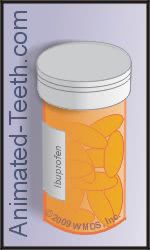
Tylenol usually makes a better choice for orthodontic pain.
Avoid NSAID drugs.
- An effect of taking NSAID compounds is that they block the production of prostaglandins.
- Prostaglandins are a class of compounds produced by your body that perform a number of functions. One of these is aiding the process of bone resorption (the loss of bone tissue next to a tooth, thus allowing orthodontic movement to occur).
- Since the formation of prostaglandins is inhibited by NSAIDs, taking them tends to inhibit the speed of tooth movement, and therefore the time needed for case completion.
NSAID analgesics include: ibuprofen (Advil, Motrin, Nuprin), aspirin, and naproxen (Aleve).
Tylenol usually makes the better choice.
A commonly used alternative for NSAID pain relievers is acetaminophen (Tylenol). And its use has not been shown to affect the rate of orthodontic movement.
Note: Consult your healthcare professional before taking any medication to confirm that it’s safe and appropriate for your use. Use medications only as directed.
▲ Section references – Karthi
B) Invisalign® aligners may cause gum or tongue irritation.
You may find that the edge of some of your aligners has a length, positioning, roughness, or sharpness that irritates your gums, cheek, tongue, and/or the floor of your mouth.
The amount of irritation that can be caused can be significant, especially if the situation is not brought under control early on. Persistent irritation can even result in the formation of an ulcer.
Statistics.
The Nedwed study cited above determined that 6% of its subjects experienced some degree of soft tissue irritation.
Despite this finding, however, wearing Invisalign® aligners is generally considered to be less irritating than wearing traditional wire-and-brackets braces which have a reputation for being especially irritating to the interior surface of the person’s lips and cheeks.
Check with your dentist before adjusting an aligner yourself.
Obviously, the needed remedy for this type of situation is to smooth off or trim down the offending aligner edge. But who should perform the adjustment, you or your dentist?
Before attempting to make an adjustment on your own (at least for the first time) you should contact your dentist’s office for advice. Let them explain (or show you) what types of changes are acceptable.
How to adjust an aligner.
- Your overall goal must be one where you do reduce the offending edge so the appliance is more comfortable to wear. But not to the extent that it compromises the aligner’s fit over your teeth, or its ability to create the tooth movements it was designed to produce.
(If you do damage an aligner, it will have to be remade. This will be an added cost for you and cause a delay in your treatment progress.)
- You’ll probably be surprised at how little reduction is needed to make a giant improvement.
- Pick out a new one, so you have a good sharp edge to use.
- Think of using the blade like a plane (dragging it along the aligner’s edge), as opposed to whittling with it, like when carving with a knife.
[Instead of pushing the blade straight into the plastic (which might easily bite in and cut off too much), hold the blade perpendicular to the aligner’s surface while firmly scraping it along the offending edge.]
Remember these two things: Trimming off just a little bit is usually all that’s needed. And you can always come back and trim more but you can’t put the plastic you’ve trimmed off back on.
C) Eating discomfort.
This topic is discussed above on this page.
Last reviewed: May 12, 2022
Author: Paul Cotner, DMD — retired dentist.
Published by: WMDS, Inc. — owner of Animated-Teeth.com.
Educational information only — not a substitute for professional dental care.
Page references sources:
Azaripour A, et al. Braces versus Invisalign: gingival parameters and patients’ satisfaction during treatment: a cross-sectional study.
Birdsall J, et al. A Case of Severe Caries and Demineralisation in a Patient Wearing an Essix-Type Retainer.
Bradley TG, et al. Do the mechanical and chemical properties of Invisalign appliances change after use? A retrieval analysis.
Fujiyama K, et al. Analysis of pain level in cases treated with Invisalign aligner: comparison with fixed edgewise appliance therapy.
Iijima M, et al. Effects of temperature changes and stress loading on the mechanical and shape memory properties of thermoplastic materials with different glass transition behaviours and crystal structures.
Invisalign.com. Frequently Asked Questions.
Karthi M, et al. NSAIDs in orthodontic tooth movement.
Kwon, et al. Force delivery properties of thermoplastic orthodontic materials.
Liu CL, et al. Colour stabilities of three types of orthodontic clear aligners exposed to staining agents.
Nedwed, V. et al. Motivation, acceptance and problems of Invisalign patients.
Pacheco-Pereira C, et al. Patient satisfaction and quality of life changes after Invisalign treatment.
Schuster S, et al. Structural conformation and leaching from in vitro aged and retrieved Invisalign appliances.
Shalish M, et al. Adult patients’ adjustability to orthodontic appliances. Part I: a comparison between Labial, Lingual, and Invisalign.
Wenger L. Thermal Properties of Commonly Used Clear Aligner Systems As-Received and After Clinical Use