Looking for information about other Dental Topics?
Full Website Index• Animated-Teeth.com •

Our review of Sonicare’s rechargeable toothbrush lines – A comparison of features, with differences between each line noted.
An overview of the Sonicare toothbrush lines.
On this page, we review each of the individual toothbrush lines that make up Sonicare’s lineup of rechargeable electric brushes.
For each toothbrush line …
We outline the range of features its models have. Point out how each line is different from or similar to others. And give you a bit of opinion about how that line’s collection of features stacks up as a whole. (Pros and cons. | What makes its brushes unique? | Reasons why you would or wouldn’t want to purchase one of its models.)
Additionally, for those lines whose members are especially difficult to keep straight, we make note of what details to keep in mind when making comparisons between them.
Additional information you may want to read …
This page has two companion pages:
- One is our Best Sonicares page. It walks you through a line of reasoning that can be used to determine which Sonicares offer the best value. (Features and capabilities vs. price.)
- And, if you’re interested, we offer the same type of product line review as found here for Oral-B electric toothbrushes too.
- As another way of learning what you need to know, we also offer our Sonicare Quiz.
Sonicare quiz – A quick way to learn the important points from this page.
https://www.animated-teeth.com/?p=771#quiz
What are Sonicare’s current toothbrush lines?
We checked Sonicare’s (USA) website on June 4, 2021, and found the following product lines listed.
- 9900 Prestige
- DiamondClean Smart
- DiamondClean
- ExpertClean
- FlexCare Platinum Connected
- FlexCare Platinum
- FlexCare+ (plus)
- HealthyWhite+ (plus)
- ProtectiveClean
- Sonicare for Kids
- 2 Series plaque control
- DailyClean
- Essence
- EasyClean
- Philips One
The range of MSRPs (manufacturer suggested retail price) for their models ranged from a whopping $400 down to just $20. So, as you can imagine, Sonicare’s different toothbrush lines offer a wide range of bundled features.
Features that Sonicare toothbrush lines all tend to have in common.
Instead of describing the same details repeatedly, we’ll simply state that there are some core features that most Sonicares (at least the better ones) tend to share.
We’ve outlined these features at the bottom of this page, and linked to that information throughout the text below.
Double-check before you buy.
We’ve put in a lot of effort in compiling the information presented on this page. But even beyond our own possible fallibility, it’s important to point out that:
- Sonicare promotional materials frequently include the line: “Specifications are subject to change without notice.”
- The Sonicare product lines seem ever in flux with new, differently featured, models introduced throughout the year.
So, just to play it safe, please do us a favor. Before you buy any toothbrush, double-check what we say you’re getting versus what’s stated on the packaging or description of the actual product you’re planning to purchase. We don’t want you to be disappointed.
The Sonicare toothbrush lines –
Characteristic features. | Similarities and differences.
a) The Prestige electric toothbrush –
The 9900 Prestige is the flagship model for Sonicare’s newest high-end toothbrush line. In fact, their website describes this brush as being their “most advanced” one.
Prices.
Model numbers we’ve seen associated with this toothbrush line: HX9990/11, HX9990/12, HX9990/13
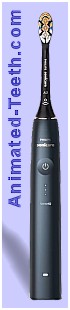
Sonicare 9900 Prestige HX9990/12
Distinguishing features of the 9900 Prestige toothbrush.
- Unlike all other Sonicare models that have multiple brushing mode capabilities, the Prestige does not provide any mechanism for switching between them on the toothbrush handle.
It is possible, however, to select from the brush’s 5 modes (Clean | White+ | Deep Clean | Gum Health | Sensitive) via the Sonicare smartphone app. (Note: Tongue Care mode is not an option on this model.)
- Whatever mode is chosen (“Clean” is the default), the Prestige’s SenseIQ feature (a new feature not available on any other Sonicare models) monitors your brushing performance in real-time. And, if it determines that something about your technique is suboptimal, it will trigger your brush to alert you (via flashing light and brush handle vibration signals). Simultaneously, it will adjust the brushing motion of your toothbrush as it feels is needed.
For example, if the SenseIQ system determines you are using too much brushing pressure, it will trigger the brush handle’s light and vibration alerts. It will also switch the brush’s brushing intensity level until you’ve reduced the amount of pressure you are using.
- You can switch between the Prestige’s 3 intensity settings (High, Medium, Low) via its handle. (Note: The Medium and Low settings reduce brushing effectiveness.)
- Via BlueTooth technology, the Prestige can integrate with the Sonicare smartphone app. Use of the app is not mandatory but is needed to be able to take advantage of all of the advanced features that this brush offers.
- BrushSync technology – The Prestige is designed for use with Sonicare’s microchipped BrushSync/Smart brush heads. (It comes with one (1) of Sonicare’s newest heads, the A3 Premium All-in-one.)
The primary function of the Brushsync system with the Prestige is keeping track of brush head use for head replacement reminders.
- The 9900 Prestige brush comes with a premium travel case that can also be used as a charging station. (USB cable included.)
Additional 9900 Prestige features.
- Utilizes click-on brush heads. This is an important brush feature that allows you to select from the full range of click-on Sonicare brush heads. Although, you’ll need to select a microchipped BrushSync/Smart head to reap all of this brush’s advanced features.
- Features Sonicare’s hallmark 62,000 brush movements/minute brushing action.
(Brush setting: Clean mode, High intensity.)
- Easy-Start, SmarTimer, BrushPacer.
- The 9900 Prestige comes with a charger base. It does not, however, provide for additional brush head storage.
- Lithium-ion battery. Operates “2+ weeks” on a full charge.
- Sonicare promotional leaflet: 9900 Prestige toothbrush.
What we feel you need to know about the Prestige toothbrush line.
It is a quality brush …
As Sonicare’s current top-of-the-line model, it’s a given that the 9900 Prestige is a good toothbrush. And we think that it’s accurate to say that with Sonicares, a higher price generally does correlate with superior product design and build refinement (sleek design, easy to hold, minimal vibration from the brush handle when used, etc…).
But overall, we’re not really so sold on this brush …
We usually feel that the collection of features that come with high-end Sonicares, like the Prestige, are generally frivolous affairs. (This includes: multiple brushing modes, multiple brushing intensities, and most “advanced” brush features.)
That opinion is based on the fact that we think the vast majority of Sonicare owners are best served by using their brush when it’s set on (full-intensity) Clean mode. (This setting generates the hallmark 62,000 brush movements/minute brushing action that Sonicares are revered for).
If instead, you’re the kind of person who feels it necessary to have a toothbrush that has every bell and whistle possible, then the 9900 Prestige should be on your list of candidates.
The smartphone brushing app …
We’ve never considered it important for a person to select a Sonicare model that is capable of integrating with their smartphone app. That’s because the app’s primary function isn’t so much to modify the function of the brush but instead to help you modify your brushing behavior, in hopes of helping you use the brush more effectively.
In situations where a person needs this type of motivational assistance, the Prestige can be a good choice. However, please note that app integration is also available with many less expensive Sonicare lines. For people who are already effective brushers, and already have the motivation to perform that task, buying a less expensive model that does or doesn’t feature app integration would seem to make a more cost-effective choice.
Bottom line …
If you want the collection of features that the 9900 Prestige offers, then we think this is a fine toothbrush to buy.
But in terms of purchasing a toothbrush that just has those vital core features we feel are important (or that you’ll even still be using after the newness of your brush has worn off), we think there are many lower-cost models that make a better choice. (This train of thought is a major premise of our Best Sonicares page.)
Want more information? Here’s our review of the 9900 Prestige .
b) The DiamondClean Smart electric toothbrushes –
This is Sonicare’s past premier toothbrush line that’s now been supplanted by the Prestige.
At the time of its introduction, it was touted as their “best ever” line. And at that time, it was also stated to be their most technologically advanced group of brushes. So generally, consider this a very high-end Sonicare but just not their latest design.
Note: When shopping, don’t confuse the “DiamondClean Smart” and “DiamondClean” (non-Smart) lines. There are substantial differences in each line’s features.
Prices.
Model numbers we’ve seen associated with this toothbrush line: HX9985/01, HX9985/41, HX9985/21, HX9984/48, HX9957/61, HX9957/51, HX9957/38, HX9924/91, HX9954/56, HX9924/62, HX9944/12, HX9944/11, HX9924/61, HX9924/41, HX9924/37, HX9924/35, HX9924/21, HX9924/11, HX9924/01, HX9903/61, HX9903/49, HX9903/41, HX9903/33, HX9903/32, HX9903/31, HX9903/30, HX9903/21, HX9903/11, HX9903/09, HX9903/01
Distinguishing features of the DiamondClean Smart toothbrush line.
- 4 or 5 brushing modes, depending on the model. (Clean | White+ | Deep Clean+ | Gum Health | Tongue Care).
Lesser models do not have Tongue Care mode. (We assign little importance to having it, use the link for more information.)
- 3 brushing intensity settings (High, Medium, Low). (The Medium and Low settings reduce brushing effectiveness.)
- BrushSync brushing mode pairing. – When one of Sonicare’s microchipped BrushSync brush heads is installed, the toothbrush automatically switches to what Sonicare considers that head’s corresponding optimal brushing mode, or else the mode you have previously programmed for that head.
(If you have faith in the ascribed benefits of using Sonicare’s different brushing modes, and that a brush head’s design helps to optimize that mode’s effectiveness, then you’ll like this feature. If instead, you feel that just using your brush in its full-power mode is the most beneficial one, and want a full choice of which style of brush head you use when you do, you’ll find this feature to be a nuisance.)
- Integration with Sonicare’s smartphone app. (App includes mouth-map and touchup reporting.)
- Smart Sensor Technology: Brushing pressure sensor, location sensor, scrubbing sensor, brush head replacement indicator.
Information that’s collected is evaluated and reports and alerts concerning them are delivered to you via various brush handle features (flashing lights, vibrations) and the Sonicare smartphone app.
- A travel case that can be used as a charging station. (Higher-end models only.) (The case requires a USB connection for charging operations.)
- Additional (typically multiple) replacement toothbrush heads are included depending on the model.
Additional DiamondClean Smart features.
- Utilizes click-on brush heads. (An important feature that allows you to select from the full range of click-on Sonicare brush heads.)
- Features Sonicare’s hallmark 62,000 brush movements/minute brushing action.
(Brush setting: Clean mode, High intensity.)
- Easy-Start, SmarTimer, BrushPacer.
- Glass charger. (Sonicare’s spiffier recharging device.)
- Lithium-ion battery. Operates “up to 2 weeks” on a full charge.
- Sonicare promotional leaflet: DiamondClean Smart toothbrush.
What we feel you need to know about the DiamondClean Smart toothbrush line.
It’s a quality brush …
As Sonicare’s yesteryear top line, it’s a given that the DiamondClean Smart models are good toothbrushes. And, as stated above, we do think that it’s accurate to say that with Sonicares a higher price generally does correlate with superior product design and build refinement.
Other than that, we’re not really so sold on this line …
It seems to us that much of what this toothbrush line offers is fairly frivolous (multiple brushing modes, multiple brushing intensities, BrushSync brushing mode switching). That opinion is biased by the fact that we think that the vast majority of Sonicare owners are best served by just using their brush’s full-intensity Clean mode (the hallmark 62,000 brush movements/minute Sonicare brushing action).
If you’re not of that opinion, then this line’s 15 brushing mode configurations (12 on lesser models) may be quite attractive to you.
The smartphone brushing app …
As discussed above, we consider the Sonicare smartphone brushing app to be more of a “brushing behavior” feature as opposed to an essential one. Its primary function isn’t so much to modify the function of the brush but instead to help you modify your brushing behavior, in hopes of your using the toothbrush more effectively.
So, if you need this type of assistance and motivation, then this line can be a good choice. However, toothbrush/app integration is also available with many less expensive Sonicare lines.
For people who are already effective brushers, and already have the motivation to perform that task, buying a less expensive model that doesn’t feature app integration would seem to make a more cost-effective choice.
Bottom line …
If you want the collection of features that the DiamondClean Smarts offer, then we think this is a fine toothbrush line to buy.
But in terms of purchasing a brush that just has those vital core features we think are necessary to have, or even ones that you’re likely to still be using after the newness of your brush has worn off, we think you can get everything you need by purchasing other Sonicare models that have a lower price. (This is a fundamental premise of our Best Sonicares page.)
If you’re considering the DiamondClean Smart line.
Keeping the models straight …
Pay specific attention to how many replacement brush heads you’ll get. And after deciding if they have any importance to you, if the brush’s travel case has the USB charging feature, and if a fifth brushing mode (Tongue Care) is included.
c) The DiamondClean electric toothbrushes –
This is the less technologically sophisticated branch of the DiamondClean line. And as such, its models lack the high-tech capabilities of the DiamondClean Smarts.
Prices.
Model numbers we’ve seen associated with this toothbrush line: HX9393/82, HX9392/05, HX9392/96, HX9391/90, HX9372/04, HX9371/71, HX9363/81, HX9362/47, HX9361/69, HX9352/59, HX9352/04, HX9351/57, HX9332/05, HX9331/43
Distinguishing features of the DiamondClean toothbrush line.
- 5 brushing modes. (Clean | Gum Care | Sensitive | White | and a fifth mode, Deep Clean or Polish, depending on the model. Nowadays, in most cases Deep Clean is the one included.)
- Note: This line does not feature brushing intensity settings.
- Note: This line does not integrate with the Sonicare smartphone brushing app. Nor does it have most of the advanced features of the DiamondClean Smart line.
- Models frequently come with a travel case that can be used as a charging station. (The case requires a USB connection for charging operations.)
- Additional (often multiple) replacement toothbrush heads are included depending on the model.
Additional DiamondClean features.
- Utilizes click-on brush heads.
- Features Sonicare’s hallmark 62,000 brush movements/minute brushing action.
(Brush setting: Clean mode.)
- Easy-Start, SmarTimer, QuadPacer.
- Glass charger. Lithium-ion battery. Operates “up to 3 weeks” on a full charge.
- Sonicare promotional leaflet: DiamondClean toothbrush.
What we feel you need to know about the DiamondClean toothbrush line.
These are quality brushes …
As stated above, it’s our impression that more expensive Sonicare brushes, like this line, typically do have a more refined design and higher build quality.
However, we’ll also state that we haven’t found that those characteristics entirely correlate with product reliability and/or longevity. So purchasing a Sonicare at these lofty prices is still a bit of a gamble.
Less may be more …
We can certainly see how this “old school” line’s lack of features (no smartphone brushing app integration, no BrushSync mode switching or Smart Sensor tracking and reporting), and the cost-savings this represents, might make this brush comparatively more attractive to some people.
Also, not having those features running apparently gives this line longer battery life between charges as compared to other high-end Sonicares. Also, you don’t have to purchase the more expensive microchipped (BrushSync) brush heads to get full toothbrush functionality.
Even so, this brush is still jacked with an excess of features …
Although this brush doesn’t have intensity settings, it still features 5 brushing modes. (We think Clean mode is really the only one you need.)
Bottom line …
Take a close look at this toothbrush’s features and form an idea of what portion of them you really think you’ll end up using over the long term. Then look at the other brushes on down this page. You’ll probably find everything you want in a less expensive model.
If you’re considering the DiamondClean line.
Keeping the models straight …
Note how many additional brush heads are included. If the travel case has charging capabilities or not. And whether the included fifth brushing mode is Deep Clean or Polish.
d) The FlexCare Platinum Connected electric toothbrushes –
This is another high-tech Sonicare toothbrush line.
Prices.
Model numbers we’ve seen associated with this toothbrush line: HX9194/54, HX9193/04, HX9192/02, HX9192/01
Distinguishing features of the FlexCare Platinum Connected line.
- 3 brushing modes (Clean | White | Deep Clean).
- 3 brushing intensity settings (High, Medium, Low).
- Note: This line does not feature BrushSync brushing mode pairing.
- Integration with Sonicare’s smartphone app. (Includes mouth-map and touchup reporting.)
- Smart sensor technology: Brushing pressure sensor, location sensor, scrubbing sensor, brush head replacement.
- Additional replacement toothbrush heads are included (currently 4), depending on the model.
- One model features a UV brush head sanitizer. (We don’t find a need for this option, use the link for information.)
Additional FlexCare Platinum Connected features.
- Utilizes click-on brush heads.
- Features Sonicare’s hallmark 62,000 brush movements/minute brushing action.
(Brush setting: Clean mode, High intensity.)
- Non-charging travel case.
- Easy-Start, SmarTimer, BrushPacer.
- Traditional charging base. Lithium-ion battery. Operates “up to 2 weeks” on a full charge.
- Sonicare promotional leaflet: FlexCare Platinum Connected toothbrush.
What we feel you need to know about the FlexCare Platinum Connected toothbrush line.
This is a quality brush …
As stated above, there seems to be a benefit in purchasing a higher-end vs. lower-end Sonicare in terms of design, refinement, and build. And we definitely consider this line to fall into the high-end category. In fact, the FlexCare name is a top line from some years ago.
This is another techie model …
With the FlexCare Platinum Connected line, we’ve returned to Sonicare’s realm of high-tech toothbrushes.
This line is similar to the DiamondClean Smarts, in the sense that its toothbrushes integrate with the smartphone brushing app and have Smart Sensor tracking and reporting. So if you want those features, here’s another chance.
We will point out that this line does not perform BrushSync brushing mode pairing. (Of course, if you feel it’s important to match your brushing mode with the brush head you’re using, you can always just do that manually.)
UV brush head sanitizers …
Historically, some models of the FlexCare Platinum Connected line featured a UV sanitizer as a part of its charging stand. We’re not fans of this option for what we feel are solid scientific reasons. (The link above explains.) Nowadays, it seems that this feature is only available with certain ExpertClean models (see below).
Bottom line …
We don’t have a lot to say. This is simply a high-end, high-tech Sonicare toothbrush that’s loaded up with 9 brushing mode configurations. And it’s lower-tech in the sense that it doesn’t offer the BrushSync brushing mode pairing option. And if that’s the collection of features you want, then we wouldn’t hesitate to buy any one of these models.
If you’re considering the FlexCare Platinum Connected line.
Keeping the models straight …
Know if the model you’re considering includes a UV brush head sanitizer or not. And note how many additional brush heads are included.
e) The FlexCare Platinum electric toothbrushes –
This is the low-tech (non-connected, non-smart) version of the FlexCare Platinum line.
Prices.
Model numbers we’ve seen associated with this toothbrush line: HX9194/54, HX9172/15, HX9112/12, HX9111/12
Distinguishing features of the FlexCare Platinum line.
- 3 brushing modes (Clean | White | Deep Clean).
- 3 brushing intensity settings (High, Medium, Low).
- Note: This line does not integrate with the Sonicare smartphone brushing app. Nor does it have the advanced features offered by many of the higher-end Sonicare lines.
- Brushing pressure sensor.
- 1 additional replacement toothbrush head is included.
- Historically, one model featured a UV brush head sanitizer.
Additional FlexCare Platinum features.
- Utilizes click-on brush heads.
- Features Sonicare’s hallmark 62,000 brush movements/minute brushing action.
(Brush setting: Clean mode, High intensity.)
- Easy-Start, SmarTimer, QuadPacer.
- Non-charging travel case.
- Travel charging base. Lithium-ion battery. Operates “up to 3 weeks” on a full charge.
- Sonicare promotional leaflet: FlexCare Platinum toothbrush.
What we feel you need to know about the FlexCare Platinum toothbrush line.
This is a quality brush …
As stated above, the FlexCare line is a top one from previous years. We consider these brushes to be a solid choice.
However, this line probably offers a little more than you really need …
Considering our stance that just using Clean mode (at High intensity) makes the best choice for most users, the fact that this brush offers 9 brushing options is overkill for us.
Bottom line …
This is a good Sonicare line but it still offers more toothbrush options (and at a higher price) than we feel a person really needs. (We elaborate more about this opinion in our Best Sonicares rundown.)
f) The FlexCare+ electric toothbrushes –
This is also one of Sonicare’s higher-end brush lines, although from many years ago.
Prices.
Model numbers we’ve seen associated with this toothbrush line: HX6921/30, HX6921/04
Distinguishing features of the FlexCare+ line.
- 5 brushing modes (Clean | Gum Care | Refresh | Sensitive | Massage).
- Note: This line does not feature brushing intensity settings.
- Note: This line does not integrate with the Sonicare smartphone brushing app. Nor does it have the advanced features offered by many of the higher-end Sonicare lines.
- Note: This brush does not have a dedicated brushing pressure sensor.
- No additional replacement brush heads are included.
Additional FlexCare+ features.
- Utilizes click-on brush heads.
- Features Sonicare’s hallmark 62,000 brush movements/minute brushing action.
(Brush setting: Clean mode.)
- Non-charging travel case.
- Easy-Start, SmarTimer, QuadPacer.
- Traditional charging base. Lithium-ion battery. Operates “up to 3 weeks” on a full charge.
- Sonicare promotional leaflet: FlexCare+ toothbrush.
What we feel you need to know about the FlexCare+ toothbrush line.
This is a quality brush …
Even at this point in our list, we still consider this to be a higher-end Sonicare line and therefore reasonably well designed and built.
Bottom line …
If we bought this brush, we’d be satisfied with it. But considering that it features 4 brushing modes beyond the single one (Clean) that we feel is important to have, there are brushes lower on down this page that could make a more cost-effective choice.
g) The ExpertClean electric toothbrushes –
This is a relatively new high-tech Sonicare line. It’s currently comprised of 3 models, the 7700, 7500, and 7300.
Prices.
Model numbers we’ve seen associated with this toothbrush line: HX9690/05, HX9630/16, HX9610/17
Distinguishing features of the ExpertClean line.
- 3 or 4 brushing modes depending on the model. (Clean | Gum Health | Deep Clean+ … or else … Clean | Gum Health | Deep Clean+ | White+).
- 3 brushing intensity settings (High, Medium, Low).
- BrushSync brushing mode pairing.
- Integration with Sonicare’s smartphone app. (But evidently no mouth-map or touchup reporting.)
- Smart sensor technology: Pressure sensor, location sensor, scrubbing sensor, brush head replacement indicator.
- Includes additional replacement brush heads depending on the model.
- Includes a charging stand. One model (7700) features a UV brush head sanitizer. (We don’t assign much value to having this option, use the link for information.)
Additional ExpertClean features.
- Utilizes click-on brush heads.
- Features Sonicare’s hallmark 62,000 brush movements/minute brushing action.
(Brush setting: Clean mode, High intensity.)
- Non-charging travel case.
- Easy-Start, SmarTimer, BrushPacer.
- Traditional charging base. Lithium-ion battery. Operates “up to 2 weeks” on a full charge.
- Sonicare promotional leaflet: ExpertClean toothbrush.
What we feel you need to know about the ExpertClean toothbrush line.
So far so good …
When we first became aware of this brush we were a bit leery. In the past Sonicare has introduced some price-point clunkers into its lineup. But when looking through online user reviews about the ExpertClean, so far it seems that people are as satisfied with their purchase as any other Sonicare line.
The app evidently isn’t as robust …
Probably the most-mentioned disappointment in reviews was that the brush/app integration didn’t offer the mapping/touchup reporting that the higher-end high-tech models do.
As confirmation, we looked through Sonicare’s documentation about the ExpertClean. It does state that the brush features a location sensor. But nowhere did we find mention of the brush having touchup or mouth-map reporting.
With Sonicares, you get what you pay for …
In a single online review, we noticed that the person stated that they considered that they felt more of their brush’s vibration in its handle than with their DiamondClean. And that seems reflective of what we’ve mentioned above about how design and build quality seems to lessen as you go lower into the Sonicare lineup.
It’s our general opinion that:
- This loss in refinement first starts to become evident in the neighborhood of the $150 to $100 (MSRP) price level in the Sonicare lineup.
- It’s typically just noticeable to those who have previously owned a higher-end model, as opposed to new-to-Sonicare owners.
- While detectable (to some), the loss in refinement doesn’t seem to pose a significant detriment to the person’s brushing experience.
Bottom line …
If this line’s features are what you’re looking for, including the app’s lack of features noted above, these seem to be reasonable brushes to buy.
If you’re considering the ExpertClean line.
Keeping the models straight …
Pay attention to the brushing modes that are offered by the different models. And if the model comes with a UV brush head sanitizer or not.
h) The HealthyWhite+ electric toothbrushes –
Prices.
Model numbers we’ve seen associated with this toothbrush line: HX8911/02
Distinguishing features of the HealthyWhite+ line.
- 2 brushing modes (Clean | White).
- 3 brushing intensity settings (High, Medium, Low).
- Note: No dedicated brushing pressure sensor.
- Note: This line does not integrate with the Sonicare smartphone brushing app. Nor does it have the advanced features offered by many of the higher-end Sonicare lines.
- Typically, no additional replacement brush heads are included.
Additional HealthyWhite+ features.
- Utilizes click-on brush heads.
- Features Sonicare’s hallmark 62,000 brush movements/minute brushing action.
(Brush setting: Clean mode, High intensity.)
- Non-charging travel case.
- Easy-Start, SmarTimer, QuadPacer.
- Traditional charging base. Lithium-ion battery. Operates “up to 3 weeks” on a full charge.
- Sonicare promotional leaflet: HealthyWhite+ toothbrush.
What we feel you need to know about the HealthyWhite+ toothbrush line.
We’ve liked this brush for a while …
We’ve considered the HealthyWhite+ a good-value purchase for a number of years now. (In our Best Sonicares rundown.)
As compared to the brushes above, and reflected in its price, this line comes with a relatively small number of extra (superfluous) features. And it lies at a level in the Sonicare lineup (the low end of the higher-end brush lines) that, while not super-refined, is still a reasonable brush.
Brushing modes vs. intensity settings.
One thing about the HealthyWhite+ line is that it has fewer brushing modes but still retains intensity settings.
We can envision scenarios where a brush might be shared with someone who can’t tolerate full-power Clean mode (like a debilitated, elderly or young person). However, even this relatively inexpensive brush (and some of the ProtectiveCleans below too) could still accommodate this expanded range of applications due to its various intensity setting options.
Bottom line …
We think this brush makes a good low-tech Sonicare choice. And it has a price where if the brush dies prematurely, it doesn’t sting quite so much.
This latter statement is a reflection of our opinion that in an era of lowest-cost manufacturing and planned-obsolescence design, all powered toothbrushes at any price level (and including all of the major brands), are just unpredictable temporary devices.
i) The ProtectiveClean electric toothbrushes –
The features of the different ProtectiveClean toothbrushes (models 6500, 6100, 5300, 5100, 4300, and 4100) vary widely, so if you’re considering one of them, pay a lot of attention to what’s included with the model you’re looking at.
Prices.
Model numbers we’ve seen associated with this toothbrush line: HX6877/84, HX6877/41, HX6877/21, HX6876/21, HX6871/49, HX6871/41, HX6857/11, HX6853/11, HX6850/60, HX6829/71, HX6817/01, HX6815/01, HX6810/50, HX6809/81, HX6481/13, HX6481/12, HX6481/11, HX6463/50, HX6462/05, HX6462/06, HX6461/04, HX6423/34
Distinguishing features of the ProtectiveClean line.
- 6500, 6100 – 3 brushing modes (Clean | Gum Care | White) and 3 brushing intensities (High, Medium, Low).
5300, 5100 – 3 brushing modes (Clean | Gum Care | White).
4300, 4100 – 1 brushing mode (Clean).
- 6500, 6100 – BrushSync brushing mode pairing. Smart sensor technology: Pressure sensor, brush head replacement.
5300, 5100, 4300, 4100 – Smart sensor technology: Pressure sensor, brush head replacement.
- 6500 – Its travel case can be used as a charging station. (The case requires a USB connection for charging operations.)
6100, 5300, 5100 – Non-charging travel case.
4300, 4100 – No travel case.
- Note: This line does not integrate with the Sonicare smartphone brushing app.
- Some models come with additional replacement toothbrush heads (1 or 2).
Additional ProtectiveClean features.
- Utilizes click-on brush heads.
- Features Sonicare’s hallmark 62,000 brush movements/minute brushing action.
(Brush setting: Clean mode. Models that have intensity settings must be set to High.)
- Easy-Start, SmarTimer, QuadPacer.
- Traditional charging base. Lithium-ion battery. Operates “up to 2 weeks” on a full charge.
- Sonicare promotional leaflet: ProtectiveClean toothbrush.
What we feel you need to know about the ProtectiveClean toothbrush line.
What a curious collection of models …
As opposed to most Sonicare lines whose brushes tend to share a core set of features, many of the ProtectiveClean models seem almost unrelated. (So pay attention when comparing.)
What a range of prices …
This line is also unique in the fact that its highest-end model costs over 3 times more than its lowest-end one.
We bring this up because, as mentioned above, as you drop further and further down into the Sonicare lineup, we feel that the design and build quality of the toothbrushes increasingly suffers. (Which is really just a way of saying that “you get what you pay for,” which only makes sense.)
That makes us a little bit leery …
Based on that premise, we feel that we’d be more inclined to buy a 6500, 6100, 5300, or possibly even a 5100 model over the bottom-end 4300 or 4100. However, the statistics associated with online reviews on retailer websites seem to suggest that even the lower-end owners tend to be quite happy with their choice, even as compared to other Sonicare lines.
But like mentioned above, we would anticipate that it’s new-to-Sonicare owners who are the ones who are so favorably impressed by the 4300 and 4100, as opposed to people who have previously used a (more refined) high-end Sonicare.
The cost of owning this brush …
We need to point out that for all features to fully function, the ProtectiveClean brushes need to be used with Sonicare’s more expensive BrushSync (microchipped) brush heads.
So you should decide how important the set of BrushSync features the model you are considering is to you. And if they’re really not, choose from another lower-tech Sonicare line, or just forgo these features by not using BrushSync heads.
Bottom line …
This seems a reasonable group of models to consider, although we would personally lean toward the higher-end ones.
If you’re considering the ProtectiveClean line.
Keeping the models straight …
More so than with other lines, the ProtectiveCleans offer a very wide range of features, so pay attention to what you’re getting.
Differences that you must pay attention to include: Brushing modes, intensity settings, BrushSync features, if a travel case is included and if it has charging capabilities, and the number of included replacement brush heads.
j) The Sonicare for Kids electric toothbrushes –
Prices.
Model numbers we’ve seen associated with this toothbrush line: HX6351/41, HX6321/02, HX6352/42
Distinguishing features of the For Kids line.
- Integration with Sonicare’s For Kids smartphone app. (This app evidently doesn’t have mouth-map or touchup reporting. But it does track brushing sessions, their duration, and gives brushing tips and provides games that can help to increase brushing motivation.
- 2 brushing modes (High, Low). (The lower setting is intended for use by smaller, younger children.)
- Comes with an assortment of interchangeable stickers that can be applied to the brush for decoration.
- Some models come with an additional replacement brush head.
- Note: No dedicated brushing pressure sensor.
- No travel case.
Additional For Kids features.
- Utilizes click-on brush heads. – The brush heads (Standard and Compact sizes) that are intended for use with the For Kids line are generally smaller in size and softer-bristled than those designed for adults.
- Features Sonicare’s hallmark 62,000 brush movements/minute brushing action.
(Brush setting: High mode.)
- Easy-Start, KidTimer, QuadPacer.
- Traditional charging base. Lithium-ion battery. Operates “up to 3 weeks” on a full charge.
- Sonicare promotional leaflet: Sonicare For Kids toothbrush.
What we feel you need to know about the Sonicare for Kids toothbrush line.
This could be used as a family brush …
Since this is another one of Sonicare’s lines designed to use their click-on brush heads, the For Kids can be used with the full range of Sonicare’s “adult” click-on heads too. And that means it could be used as the shared electric toothbrush for all members of a family.
Note: Adults may find the KidTimer and QuadPacer features of this brush annoying.
If you’re considering the Sonicare For Kids line.
Keeping the models straight …
Take notice of how many replacement brush heads are included.
k) What about the even lower-end Sonicare toothbrush lines?
2 Series plaque control, DailyClean, Essence, EasyClean, Philips One
At this point in our review of the Sonicare lineup, we hit an impasse. Namely, the Sonicare (USA) website.
While using it to perform the research needed to compose this page, we finally concluded that we felt unsure that we could trust the accuracy of the information it reported. Most specifically, we felt conflicted about what is stated about the brushing actions of some of the lower-end toothbrush lines, especially in comparison to what was stated about some models in previous years.
31,000 vs. 62,000 movements per minute.
It would be our opinion (explained here) that the only reason to buy a Sonicare toothbrush is to get its full-power, 62,000 brush movements-per-minute brushing action. And compared to any other Sonicare models that do have this feature, we consider those that don’t to be subpar and simply not worthy of purchase.
Does that mean we feel that 31,000 movement-per-minute Sonicare toothbrushes are bad products?
No, not necessarily. One of these models might make a preferable choice over some other brand’s product that also offers a similar or even lower-quality brushing action. But as compared to other Sonicare models, we don’t respect these brushes. And for that reason, it doesn’t bother us not to include details about them on this page.
Who’s right, the Sonicare website or us?
We don’t know for sure. But what we do know is that some toothbrush lines that for years on end before had been stated by Sonicare as having the full-power action (historically worded by Sonicare as 31,000 brush-STROKES-per-minute) are currently reported on their website as only offering the 31,000 brush-MOVEMENTS-per minute, which is an entirely different action (it’s half the frequency).
Possibly Sonicare redesigned all of these toothbrush lines?
Absolutely, they could have. Or this could just be a wording error they have made and have yet to pick up on. We don’t know.
What if you want to consider one of these lines?
We would feel that it would be imperative to confirm, via the product’s packaging, that it does feature a 62,000 brush-movements-per minute brushing action. If you can’t tell that it does, or if it doesn’t, we would be inclined to purchase a different model.
Features that Sonicare toothbrush lines typically/frequently share.
As promised at the beginning of this review, here’s background information about many of the features that Sonicare lines often have in common.
a) Full-power brushing mode.
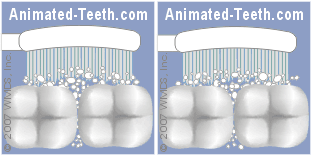
The single most important feature to look for in a Sonicare is to note that it’s able to produce their hallmark “62,000 brush movements-per-minute” brushing action.
Is this something new?
Long-time users are probably more familiar with seeing Sonicare describe their brushing action as the equivalent “31,000 brushstrokes/minute,” which would seem to be a lesser mechanism.
But contrary to what you might initially think, there’s nothing new here. Sonicare is just putting a new spin on their original brushing motion. Using their revised math, two brush movements (once up and then once down) = one brushstroke (a combined up and down motion). It’s only the terminology that’s new.
How important is this?
- It’s vital. This is the brushing action that delivers a Sonicare’s maximum brushing effectiveness. And it’s the one that Sonicare built its reputation on in scientific studies and published literature.
- Their brushes that don’t produce a 62,000 movement/minute brushing action can’t provide the same level of cleaning effect.
What to look for.
On nearly all Sonicare models it’s “Clean” mode that produces their constant full-power 62,000 movements/minute brushing action. If the brush has Intensity settings, High needs to be selected.
How important is it to have other Sonicare brushing modes?
We are of the strong opinion that this full-power mode is the only setting that the vast majority of brush owners need to or should be using.
It’s our stance that the use of this mode alone meets or exceeds whatever might be accomplished using any other settings (especially in terms of brushing efficiency and effectiveness). And for this reason, and although all higher-end models feature them, we place essentially no value on a Sonicare brush having additional “novelty” modes.
We’ll also point out … that the handle of the newest Sonicare model (the 9900 Prestige) doesn’t even provide a method of switching brushing modes (you have to use the smartphone app). By default, the brush is set to Clean mode, and by design, Sonicare makes it inconvenient to switch to any other. That says it all for us.
Related page: Sonicare brushing modes – What do they do? Which ones are important to have?
b) Click-on brush heads.
The Sonicare product line has finally reached a point where all but its very, very lowest-end models utilize their click-on (snap-on) brush heads.
How important is this?
This is a very significant feature because it gives you the freedom to select from Sonicare’s entire lineup of click-on heads (which is substantial) when choosing replacement brush heads for your brush. You’re not just limited to the style it originally came with.
Note.
For this reason, when comparing toothbrush lines and models we place no emphasis on which type(s) of brush head a model comes with. Remember, these are just disposable items that you’ll be replacing soon enough. (Sonicare recommends every 3 months).
Related page: Sonicare brush heads – Designs/Styles/Features – Which ones are best?
As you read on …
This next section lists features that most Sonicare toothbrush lines do share, and as such you should be aware of them. However, we assign no overwhelming importance to having any of them.
c) Lithium-ion battery.
Sonicare’s toothbrush lines come with either a lithium-ion or NiMH rechargeable battery.
- Lithium-ion technology has more favorable recharging characteristics and therefore is the more desirable type.
- Also, those models that feature them tend to have a smaller, sleeker (less bulky) body style.
(We provide more details about Sonicare batteries below on this page.)
d) 110 – 220V charging.
The primary charging units that come with Sonicare rechargeables are designed to operate with either 110 or 220-volt electrical sources, a point that could be important for world travelers.
(We provide more details about Sonicare charging units below on this page.)
e) Smartimer / KidTimer.
All Sonicares feature some type of brushing timer. In most cases, they run for 2 minutes but on some models, this varies according to the brushing mode being used.
(More details about Sonicare brushing timers.)
f) QuadPacer / BrushPacer
BrushPacer is a beep-and-pause signal that reminds you when to move on to brushing other sections of your mouth. It also integrates with the Sonicare smartphone app. Its precise settings vary according to which brushing mode has been selected.
QuadPacer can be thought of as the non-Smart near-equivalent of BrushPacer. It divides SmarTimer’s 2-minute duration 4ths, therefore signaling when you should switch to brushing the next quadrant of your mouth.
g) Easy-start.
This is an introductory brushing mode that gradually builds up its intensity over a consecutive number of brushing sessions, so to help you get used to the sensation of using your brush.
(More details about Sonicare’s Easy-start function.)
h) Brushing pressure sensing.
When excessive force is used, the brushing motion of all Sonicare toothbrushes tends to stall. Beyond that, some product lines feature dedicated excessive brushing pressure sensors. Depending on the model, they signal their warning via a light on the toothbrush handle, changes in the toothbrush’s vibrations, and/or the smartphone app.
More details about Sonicare brushing pressure indicators.)
i) Smart Sensor Technology
Some higher-tech Sonicare lines feature the following types of Smart Sensor feedback/reporting. Depending on the model, this information is brought to the user’s attention via brush handle indicator lights, brush handle vibrations and/or the brush’s associated smartphone app.
- Pressure sensor: Monitors if excessive brushing force is being used.
- Scrubbing sensor: Detects if you’re using too much motion with your brushing technique.
- Location sensor: This sensor tracks information about the activity that occurs during your brushing session. With the most advanced models, it provides mouth mapping and touchup (missed areas) reporting.
- Brush head replacement reminder: Based on information collected from brushing sessions (duration and pressure used), a signal (via indicator light and/or smartphone app) advises you when you should replace your current brush head.
This feature requires the use of Sonicare’s microchipped BrushSync brush heads.
Additional details about some Sonicare features.
The remainder of this page provides additional information about the following Sonicare options, any of which might be an important factor for you when selecting a specific model.
- The Sonicare UV brush head sanitizer. – What does it do? Is it necessary to have it?
- Charging units. – Glass, travel, travel-case (USB) charging units. Voltage ranges.
- Battery types. – Lithium-ion vs. NiMH. Advantages and disadvantages of each.
- Battery replacement. – Possible options.
- Travel features and cases.
a) The UV brush head sanitizer.
The charging stand of one of Sonicare’s ExpertClean models features an integrated UV brush-head sanitizer. (The letters “UV” refer to ultra-violet light, which serves as the sanitizing agent.)
Sonicare used to offer freestanding versions of this unit (HX6160/D, HX7990). And in years past, some FlexCare models featured a sanitizer but have apparently been discontinued.
What does this unit do?
The Philips Sonicare website states that their sanitizer kills up to 99% of the bacteria and viruses that can live on a toothbrush.
This includes the bacteria E. coli (most strains are harmless but some do cause food poisoning) and S. mutans (a bacterium that causes tooth decay). It also includes the virus H. simplex (one of the herpes viruses).
Is toothbrush sanitizing really necessary?
As important as all of the above sounds, we must mention the following points.
a) This is a sanitizer, not a sterilizer.
Sonicare calls their product a sanitizer, as opposed to a sterilizer, because that’s what it is. Using it will reduce the number of microorganisms that reside on your brush head (sanitize it) but it won’t kill them all (sterilize it).
That means even after using the unit your toothbrush really won’t be germ-free. When you brush you will still be exposed to some quantity of bacteria, admittedly, however, fewer of them. But any small number of microorganisms can seed a colony.
b) Sanitizing doesn’t really protect you from anything.
There is no question that toothbrushes can harbor microorganisms. And it is a documented fact that sharing a toothbrush can spread microorganisms from one person to another. (So can kissing, or even just drinking out of the same soda can as someone else.)
But this isn’t what most of us do. We usually don’t share toothbrushes with others, we just use our own.
So in the typical case (where you do just use your own brush), there will be microorganisms present but they will only be the same types that already live in your mouth. And there’s no evidence that this scenario leads to any specific health problems or concerns (such as re-contamination, oral infections, or other adverse effects).
Is getting a UV sanitizer worth the money?
It’s our opinion that spending money on a toothbrush sanitizer isn’t necessary. But you do need to exercise some toothbrush common sense (which is free).
- You shouldn’t share your toothbrush with others.
- You should rinse your brush off after you have used it and store it separately from (no contact with) other people’s brushes.
- You should allow your brush to thoroughly dry between brushings (even if it means alternating between the use of more than one toothbrush or brush head) because damp environments are more conducive to bacterial growth.
Standing upright is a good orientation to store a toothbrush in because fluids will drain off of it rapidly as opposed to pooling. Placing a cover or cap over a brush or placing it in a closed container may prevent it from thoroughly drying out between uses.
For more information about toothbrush care, take a look at the following resorces, none of which endorse a need for it.
- American Dental Association’s webpage that discusses toothbrush care.
- The State of Washington’s Tooth Tutor webpage, section How to Take Care of My Toothbrush.
- Consumer Reports’ webpage titled How to Keep Your Toothbrush Clean.
b) Sonicare toothbrush batteries: Lithium-ion vs. Nickel-metal hydride.
Most Sonicare models feature a rechargeable lithium-ion battery while a few have a nickel-metal hydride (NiMH) one.
Advantages of lithium-ion batteries.
Between the two types, choosing a Sonicare model that has a lithium-ion battery has some slight advantages.
- In general, lithium-ion batteries tend to be smaller and lighter than their NiMH equivalents. That means the overall body size of toothbrush designs that use them can be lighter and smaller, which is generally a plus.
- Lithium-ion batteries charge more rapidly. And the issue of there being a “memory effect” is less of a concern with them (which occurs when a battery is recharged before it is fully empty, see comments section below).
- Philips Sonicare information states that their models that feature lithium-ion batteries can be used for “up to 3 weeks” on a single charge. In comparison, they suggest that their NiMH models will only run for “up to 2 weeks.”
As a disadvantage, lithium-ion batteries are more expensive. Our features review for each of the current models confirms that those that have a NiMH battery tend to cost less.
Can you fly with a Sonicare that has a lithium-ion battery?
The FAA places restrictions on the size of lithium-ion batteries that passengers can carry. The cutoff point (checked or carry-on baggage) for consumer products appears to be 100-watt-hours per battery (FAA.gov).
What size are Sonicare lithium-ion batteries?
We checked the replacement battery offering of three different online retailers for the Flexcare (a product that’s relatively new, yet old enough that there’s a market for replacement batteries).
All three sell a 3.7 volt, .8 amp-hours lithium-ion replacement. Per the FAA.gov web page above, the equation for calculating watt-hours is:
- 3.7 volts X .8 amp-hours = 2.96 watt-hours
Extrapolating on that calculation, one could easily conclude that Sonicare toothbrushes fall below the 100 watt-hour threshold with ease and therefore should be allowed in both carry-on and checked baggage.
Replacing the batteries in your Sonicare.
We consider it a very valid criticism of Sonicare products that they’re not designed for routine battery replacement by the brush owner. Because of this, battery failure generally equates with toothbrush death (of what might otherwise be a fully functional unit).
Battery replacement is possible.
If you’ve determined that what your brush needs is a new battery, you do have some options if you want to pursue them.
a) Buy a replacement battery.
It’s easy enough to find websites or eBay stores that sell replacement rechargeable batteries for various Sonicare models. They typically describe how to make the swap. We’ve also seen a number of YouTube videos that explain the process too.
As far as skills go, doing the work isn’t hard but it’s not easy either. You need a few tools (a pair of vice grips) and the ability to use a soldering iron. Don’t buy a battery until you’ve viewed a video and really think you’re capable of performing the work.
b) Use a replacement service.
We’ve also run across some websites and eBay stores that offer battery replacement as a service. You send your brush in, they return it to you with a new battery installed.
We don’t have any first-hand experience with using either approach but applaud anyone who seeks to circumvent Sonicare’s intention of planned obsolescence. If you have any experiences to share, please leave a comment below.
Either type of repair will involve breaking factory seals. And because of this, it’s likely that your brush won’t be quite as water-resistant as it was previously. So take precautions afterward so to maximize the lifespan of your rejuvenated brush.
Recycling instructions.
At that point in time when your toothbrush, or a battery you’ve replaced, must be discarded keep in mind that these items should be disposed of appropriately (and hopefully the batteries recycled).
The owner’s manual of each Sonicare model (as well as Sonicare’s website) provides information about removing the battery from the toothbrush’s body (a one-time, non-reversible, destroying process).
The Sonicare PowerUp runs on disposable batteries.
Different than all other Sonicare models, the PowerUp (and historically the Xtreme e3000) runs on replaceable, off-the-shelf batteries (AA alkaline). This type of design avoids the problem of battery failure causing the premature death of the brush.
However, the brushing action created by this model is subpar (15,000 brush strokes/minute) as compared to the standard rechargeable ones (31,000 brush strokes/minute).
c) Recharging your Sonicare.
Sonicare toothbrushes recharge via induction. This means that instead of making a direct connection with your brush (like plugging in a wire), you simply sit it on its charging unit (stand) and the process takes place automatically. It can take up to 24 hours for lithium-ion and 48 hours for NiMH battery models to fully charge up.
Different product lines come with different styles of chargers. Except for personal preference, we’re unaware of any special advantage that any one type offers.
a) The Glass charger.
Instead of placing your toothbrush directly on a conventional charging stand, with this unit you place your brush in a glass (that’s supplied), which in turn sits on the charger itself. The DiamondClean and DiamondClean Smart brush lines offer this feature.
b) The Wireless (Qi) charger.
Qi technology is a method used to recharge Qi-enabled smartphones wirelessly. Historically, some DiamondClean models have featured Qi capabilities. However, at this point in time, we are unaware of any that do.
c) USB travel case charging.
Some models (DiamondClean Smart, DiamondClean) come with a “charging” travel case. The idea is that instead of having to take your regular unit along, the travel case itself can be used to recharge your brush’s battery.
A USB cable (included) is used as the electrical source. This can be plugged into a port on your computer or else on an electrical outlet adapter (also included), like you probably use with your phone.
d) Travel chargers.
Some Sonicare models that have relatively large charging bases have a design where the actual charging unit can be separated off. That way when you go on a trip you can just take the smaller “travel” charger itself.
Some brushes don’t offer this feature. But if not, take a close look. Often the charging stands of these models are relatively small anyway thus making traveling with them easy enough.
Multi-voltage charging.
We’re under the impression that all Sonicare charging units are designed to work with power sources ranging from 100 to 240 volts A/C. This information can be confirmed by looking at the bottom of your toothbrush’s charging base.
Despite the fact that the charger is compatible with a wide range of voltages, you may need to purchase a plug adapter so your unit can physically be plugged into whatever style electrical outlet you encounter.
d) Traveling with your Sonicare – Cases.
Many Sonicare models do come with a travel case. If having one is important to you, make sure to specifically check the packaging of the toothbrush model you plan to buy so you know for certain that one is included.
Traveling without a case.
While having a case is a convenience, a Sonicare can be packed easily enough without one.
- When one isn’t used, it’s best to separate the brush head from your toothbrush’s body so to lessen the chance of damage.
- All Sonicare brush heads (original and replacement) come with a hard plastic protective cap that’s capable of protecting the head’s bristles from damage.
- Brush heads are best stored in a container and location that allows them to thoroughly air dry between brushings.
Additional details about traveling with your Sonicare.
Up above on this page we discuss these features that might be important or especially convenient for some travelers:
- The DiamondClean USB recharging travel case.
- Sonicare multi-voltage charging features.
We’ve mentioned throughout this page that we have a Best Sonicares Page. You should give it a read.
On it, we explain our thinking on how to weed through all of Sonicare’s features to arrive at a selection of models that can be expected to deliver all of the brushing effectiveness that you need, at the lowest possible brush cost.
[Philips and Sonicare are registered trademarks of Koninklijke Philips Electronics N.V. Easy-start, BrushPacer, QuadPacer and BrushSync are registered trademarks of Philips Oral HealthCare, Inc.]
Last reviewed: March 16, 2026
Author: Paul Cotner, DMD — retired dentist.
Published by: WMDS, Inc. — owner of Animated-Teeth.com.
Educational information only — not a substitute for professional dental care.
Page references sources: